


Filters
Date Range
Type
Focus Area
Audience
Level
Resource Filters
Resource Type
Research Method
Resource Format
Support Filter
Support Type
Blog Filter
Blog Category
Thousands of Feet Above Earth, Teachers’ Immersive Science Learning Took Flight
SETI Institute leaders share how their NASA-funded Airborne Astronomy Ambassadors program connected educators with real-world scientific research and how WestEd’s evaluation helped strengthen the program and demonstrate its impact on teaching and learning.

Supporting the Adults Who Support Young Children: Insights on Mental Health Consultation, Reflective Practice, and Professional Community
A spotlight on supporting early childhood educators through reflective practice, mental health consultation, and community building.

Honoring 40 Years and Shaping the Future of Infant and Toddler Care
Professionals from around the world came together at PITC’s 40th anniversary conference, united by a shared commitment to infant and toddler care.

How PITC and Early Head Start Are Aligned in Purpose and Practice
Learn how PITC supports Early Head Start with research-based training and tools for nurturing, developmentally appropriate infant and toddler care

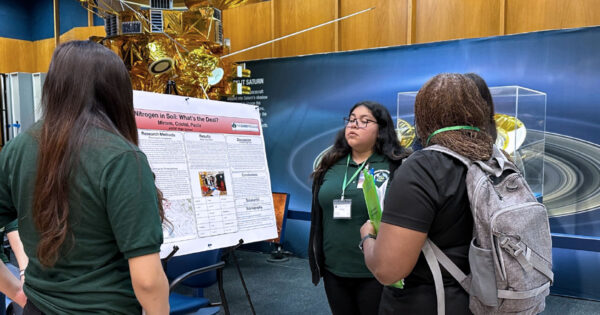
Real Science, Real Impact: How WestEd Brings NASA’s GLOBE Program to Life in Classrooms
In partnership with UC Berkeley, WestEd brings NASA’s GLOBE program to K–12 classrooms, equipping teachers to guide students in collecting real environmental data, developing STEM identity, and presenting their findings to working scientists.
An Onramp to Data Science in the Science Classroom
Discover how middle school science teachers can incorporate data science into instruction using big data tools, language routines, and NGSS-aligned practices.

Join the NURTURES Impact Study: Strengthening Elementary Science, Math, and Literacy
In this Q&A, WestEd Senior Project Director Cathy Ringstaff answers district and school leaders’ questions about joining the NURTURES impact study—what it involves, how schools benefit, and how it works.

What Education Leaders Need to Know About Interim Science Assessments
Discover how innovative interim science assessments help educators gain actionable insights and strengthen local assessment systems.

Six Tennessee School Districts Work Together to Advance Science Education
This fall, the state of Tennessee is shifting to rigorous new learning goals, the Tennessee Academic Standards for Science, that will raise the bar for…

New Research Explores What Longitudinal Early Literacy Data Reveal About Persistent Reading Gaps
WestEd researchers analyzed early literacy screening data to examine what happens to students who begin the year at risk for reading difficulty. The findings raise questions about how early screening data are used and how long students are allowed to remain at risk without additional support.