


March 20, 2026
Key Takeaways:
- AI can be used to free up time for human collaboration.
- Measurable gains in math achievement are easy and cost-effective to implement.
- Modern pathways can speed student progress and connect to real goals.
- K–12 postsecondary partnerships can drive scale.
Mathematics educators and postsecondary leaders face a wide range of challenges—from supporting student motivation and belonging in the classroom to redesigning college math pathways that set students up for career success. Meeting these challenges requires research-grounded strategies, strong cross-sector partnerships, and a willingness to engage with emerging tools like generative AI.
In this Spotlight, learn more about integrating generative AI while preserving social connection in math classrooms, building motivating learning conditions for math students, and modernizing postsecondary math pathways to expand student opportunity.
Explore How Generative AI Is Changing Math and Science Teaching
As generative AI tools become more prevalent in K–12 classrooms, mathematics and science teachers are navigating new questions about how to incorporate them into their practice. In Episode 120 of the Teaching Math Teaching Podcast, the hosts speak with Dr. Drew Nucci, a researcher at WestEd, about his firsthand experiences teaching mathematics and his research on how teachers are considering generative AI.
A central theme of the conversation is the relationship between generative AI and social connection: As AI takes on more of certain tasks, how do teachers protect the human relationships and collaborative experiences that matter in math learning?
Listen to Episode 120 of the Teaching Math Teaching Podcast.
Build Accessible Math Learning Conditions
At the heart of accessible math learning conditions is the Math Narrative Project, an initiative advancing an evidence-based messaging and narrative change strategy to improve math instruction and outcomes for 6th–10th grade Black and Hispanic students of all incomes, as well as Asian American and Pacific Islander (AAPI) and White students from lower income backgrounds. The project focuses on these students because they are most likely to encounter systemic barriers to accessing high-quality math education and resources.
Supporting the work of making math accessible for all, the PERTS Elevate practice guides for math-specific learning conditions translate research on student motivation and belonging into concrete, classroom-ready practices for math educators. These practice guides were codesigned by WestEd and math teachers in collaboration with PERTS and Math Narrative Project staff, centering the knowledge and experience of practicing teachers alongside research on student motivation and belonging. The guides are evidence based and practically grounded.
Explore the PERTS Elevate Math Practice Guides. (free registration required)
Read About the Rigorous Evidence for an Engaging Math Program
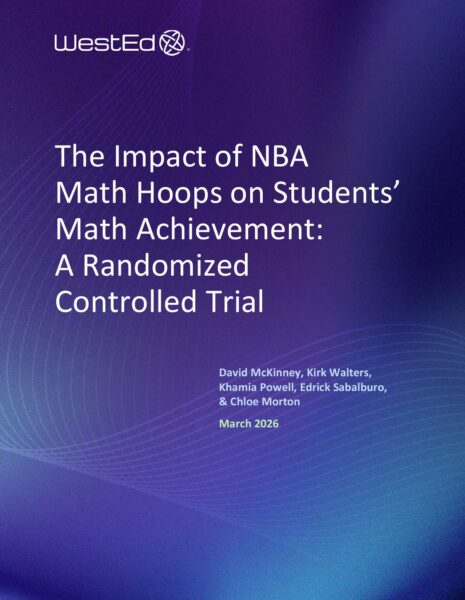
A new randomized controlled trial offers compelling evidence for the impact of NBA Math Hoops on student math achievement. The study, conducted by David McKinney, Kirk Walters, Khamia Powell, Edrick Sabalburo, and Chloe Morton, provides some of the most rigorous evidence yet for a math acceleration program designed for use outside the school day.
The findings are striking — students in NBA Math Hoops classrooms scored an average of 0.19 standard deviations higher than their peers in STEM enrichment classrooms. The program also proved easy to implement—requiring just 3 hours of training and free materials—and cost-effective, with an investment of less than $20 per student beyond standard programming costs. For school and district administrators and math education researchers, this study offers a rigorous, real-world validation of a program already used by thousands of educators across the country, often in out-of-school-time settings.
Read the full report: The Impact of NBA Math Hoops on Students’ Math Achievement.
Modernize Postsecondary Math Pathways to Expand Student Opportunity
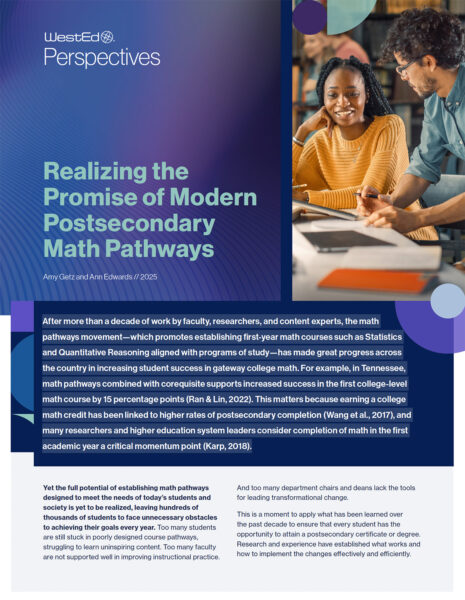
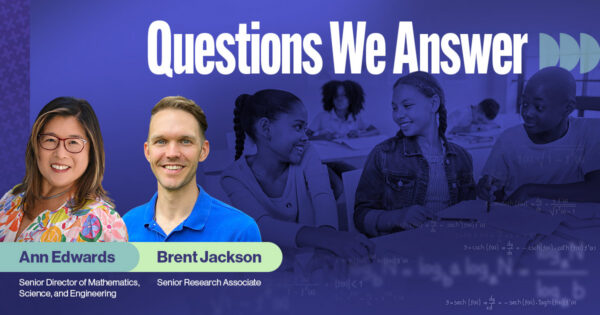
Many college students remain in traditional math course sequences that delay their progress, fail to connect to their academic and career goals, and offer little support for success. A new WestEd Perspectives brief by Amy Getz and Ann Edwards confronts these long-standing barriers and offers a clear roadmap for change.
Realizing the Promise of Modern Postsecondary Math Pathways identifies key obstacles—including inadequate faculty and leadership support for instructional improvement and incomplete implementation of effective models—and translates research into actionable guidance for education leaders.
Read the Perspectives Brief: Realizing the Promise of Modern Postsecondary Math Pathways.
Complementing the brief, WestEd experts Amy Getz and Ann Edwards go deeper in a recorded webinar that examines the dramatically changed landscape of postsecondary mathematics.
Watch the Webinar: Realizing the Potential of Postsecondary Math.
How WestEd Supports Mathematics Education
From K–12 classrooms to college campuses, mathematics education requires solutions that are grounded in research, responsive to the needs of educators and students, and designed for real-world implementation. WestEd’s experts provide the evidence-based strategies and technical assistance that turn challenges into opportunities for lasting change.
Ready to partner with WestEd? Explore how research and collaboration can drive continuous improvement in mathematics education.

Ready to Support Your Thriving Learners and Empowered Communities?
Connect with our WestEd experts.
"*" indicates required fields
More Related to This Post
Blogs & Podcasts
Research insights and stories designed to inform, engage, and inspire.


Events
Research insights and stories designed to inform, engage, and inspire.
Resources
Browse our high-quality publications and resources designed to inform and engage professionals in a variety of fields including K–12 education, early childhood, and health and justice.