

October 7, 2025
By Rachel Tripathy
Literacy program developers face a mounting challenge: States increasingly demand strong evidence of effectiveness for curriculum approval, yet building that evidence requires specialized expertise, significant resources, and strategic planning that many developers struggle to navigate alone.
This demand for evidence reflects a deeper commitment to student outcomes. Because districts recognize that high-quality instructional materials (HQIM) are critical for instructional quality and coherence, there is an increasing focus on research that investigates not only whether literacy programs work but also the specific factors that enable implementation success across diverse classroom settings. This shift toward evidence-based decision-making benefits everyone—students receive more effective instruction, districts make smarter investments, and developers gain valuable insights to strengthen their programs.
The Every Student Succeeds Act (ESSA) established a four-tier evidence framework that provides clear standards for evaluating program effectiveness. These evidence levels range from strong evidence supported by randomized controlled trials (RCTs) to promising evidence based on correlational studies, offering a roadmap for HQIM developers seeking to understand and document their program’s impact.
However, conducting high-quality research requires more than a one-size-fits-all approach. Each literacy program has unique elements and implementation contexts that demand tailored research strategies. The most effective evidence-building efforts are grounded in the science of reading, aligned with program-specific logic models, and designed to generate actionable insights for improving program materials and implementation methods.
WestEd brings deep expertise in literacy research, assessment design, and program evaluation to help developers navigate this complex landscape. Based on our extensive experience supporting curriculum and education technology companies, we’ve identified key strategies for evidence building that both meet regulatory requirements and drive meaningful program enhancement.
Why One-Size-Fits-All Research Doesn’t Work
Each literacy program has unique elements and possesses a different level of existing evidence. An effective evidence-building strategy should be tailored to your program’s current status and aspirations, with particular attention to how the program incorporates the science of reading research and structured literacy components. A strategic research agenda builds systematically on existing evidence while testing the specific causal mechanisms hypothesized to drive student outcomes.
The most successful programs align their research efforts with a well-developed logic model, ensuring that each study addresses critical linkages between program components, implementation processes, and expected results. For example, needs assessments and expert reviews are critical foundational steps that ensure a program is appropriately developed based on target needs and objectives. Usability and feasibility testing assesses whether that well-designed program can be implemented as intended across diverse classroom settings, paving the way for more rigorous efficacy studies like RCTs.
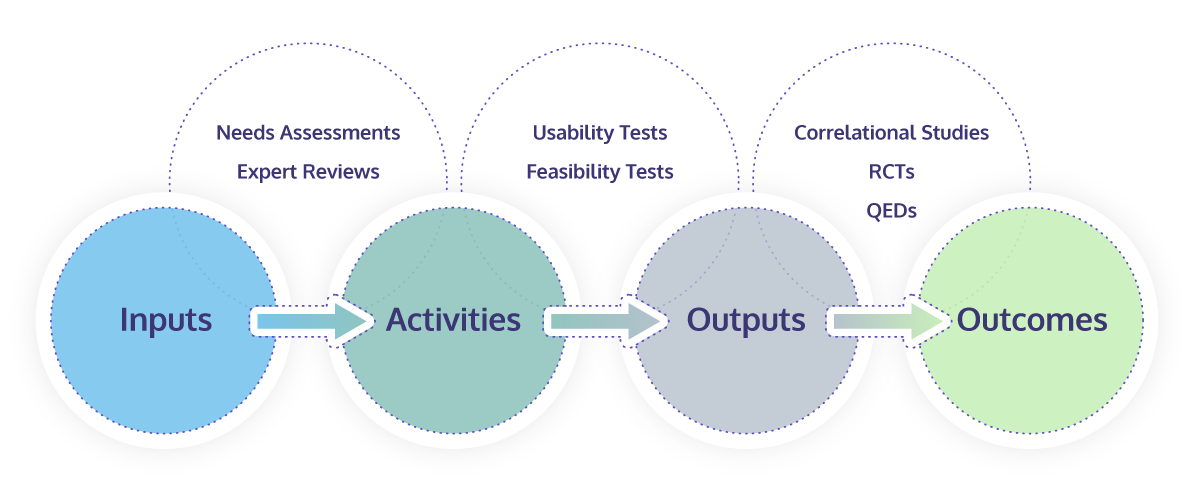
Researchers with broad expertise in literacy, assessment design, and educational technology can help identify the most efficient path to building your evidence base.
Four Pillars for Evidence-Building Success
Effective evidence building rests on four interconnected pillars that work together to create a comprehensive research strategy. While each pillar addresses distinct aspects of the research process, success depends on thoughtful integration across all four areas from the earliest stages of planning.
Foundational Evidence. Before embarking on rigorous efficacy studies, literacy program developers must first establish that their materials rest on solid theoretical and practical foundations. This critical first step involves documenting how your program is grounded in evidence-based practices aligned with the science of reading and structured literacy approaches, ensuring that the instructional components themselves reflect what research tells us works for developing readers. Equally important is demonstrating standards alignment and establishing that your program’s content, scope, and sequence have undergone expert review to ensure coherence and developmental appropriateness.
A well-articulated logic model serves as the backbone of your evidence-building strategy, clearly mapping how specific program components connect to intended student outcomes. This logic model should also identify which elements are essential for implementation. Finally, foundational evidence must demonstrate that your materials are not only theoretically sound but practically feasible in real classroom settings, with particular attention to how they serve diverse learners across different contexts. Without this solid foundation, even the most rigorous experimental designs will struggle to produce meaningful evidence of effectiveness.
Research Design. Effective evidence-building requires striking the right balance between methodological rigor and practical feasibility. The most successful research partnerships begin by thoroughly evaluating existing evidence for a given program, allowing researchers to identify the most logical next steps in developing higher levels of evidence. This foundation then informs decisions about appropriate research designs, sample sizes, and outcome measures that will meaningfully advance your evidence base while remaining practical.
Equally critical is strategically selecting research sites that will provide both valid results and diverse representation. This involves analyzing potential partner districts across multiple dimensions—including location, district size, student demographic composition, and existing familiarity with the target instructional materials. Understanding what data sources are already available at potential sites—from state assessment scores to district-collected metrics, alongside assessing the feasibility of collecting additional data through surveys, usage logs, or classroom observations—ensures that research questions remain tightly aligned with available evidence sources. This comprehensive approach to research design maximizes the likelihood that studies will yield actionable insights while building toward the robust evidence base needed for state approval and district adoption.
Quality Assurance. Maintaining research integrity throughout the evidence-building process is essential for producing credible results that will withstand scrutiny from state approval committees and the broader educational research community. This means partnering with independent evaluators or research organizations to ensure objectivity, preregistering study designs and analysis plans to prevent post hoc modifications that could bias results, and implementing robust protocols to monitor implementation fidelity across all study sites. Equally important is employing appropriate data analysis techniques, using multiple measures to assess both program implementation and student outcomes, and transparently documenting study limitations and contextual factors that may influence results. These quality controls not only strengthen the validity of individual studies but also build the credibility needed for your evidence base to support inclusion on state-approved materials lists.
Strategic Roadmap. Building a robust evidence base requires a coordinated, long-term approach that strategically sequences research efforts to maximize both scientific rigor and market impact. This involves developing a phased research agenda that systematically builds from foundational feasibility studies toward evidence of impact, while carefully considering state-specific approval requirements and aligning timelines with adoption cycles to ensure your evidence is available when decisions are being made. Successful developers also plan for sustainability by budgeting for ongoing research and evaluation efforts, identifying pathways for peer-reviewed publication and other dissemination strategies that will amplify the reach and credibility of their findings. This strategic approach ensures that each research investment contributes to your ultimate goals while positioning your program competitively in an increasingly evidence-focused marketplace.
Download a companion checklist that details the specifics for each consideration.
The checklist was developed by WestEd literacy researchers based on extensive experience supporting developers in building evidence for their programs and navigating state approval processes.
Partner With WestEd
As the field of education continues to prioritize materials grounded in research-proven practices for teaching reading, developers who proactively build and document their evidence base will be positioned for success. The considerations above, along with the companion checklist, provide a starting point for growing a research agenda, but the most effective approach will be customized to your program’s unique characteristics and goals.
For developers seeking to navigate this complex landscape, partnering with experienced researchers can help streamline the evidence-building process and maximize the likelihood of securing favorable ratings and inclusion on state-approved lists when your program is ready.
If you’re interested in a personalized consultation about your program’s evidence-building strategy, contact us.
More Related to This Post
Blogs & Podcasts
Research insights and stories designed to inform, engage, and inspire.






Resources
Browse our high-quality publications and resources designed to inform and engage professionals in a variety of fields including K–12 education, early childhood, and health and justice.