

April 8, 2026
Nearly one third of adults in the United States lack basic numeracy skills, limiting access to postsecondary education, career opportunities, and full participation in civic life. Adult foundational education programs play a critical role in addressing this challenge, especially when instruction reflects how adults learn, what they need, and what they aim to achieve. In this context, it is important to investigate what works best to support adult learners.
Welcome to Questions We Answer, our blog series where WestEd’s mathematics experts respond to common questions from the field with practical tips and insights for educators and leaders.
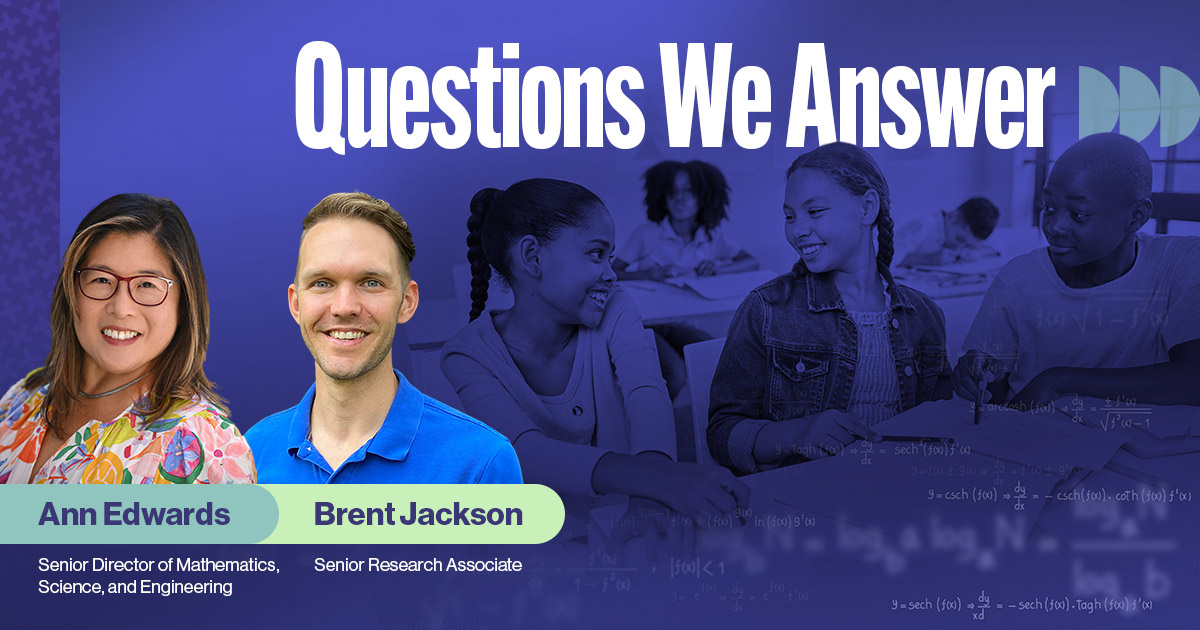
Ann Edwards is Senior Director of Mathematics, Science, and Engineering at WestEd, and Brent Jackson is a Senior Research Associate at WestEd who studies student and teacher learning across grade levels.
We asked them the following question:

Here’s what they told us:
Adult learners bring a wide range of experiences and goals to numeracy classes, often managing work and family responsibilities while pursuing high school equivalency or career advancement objectives. Adults use math in daily life, and that experience should inform instruction. When instruction draws on familiar contexts, such as budgeting or planning travel, students can use what they already know to understand mathematical ideas. Adult numeracy instruction should start with learners’ needs and offer flexible ways to participate and engage with peers.
Drawing on our work with adult education instructors, learners, and researchers, we’ve developed the following principles.
Create Lessons That Are Interactive and Participatory
Adult learners report that strong student–instructor relationships are essential to support their learning and continued involvement in course material. Students noted that active learning with peer interaction and collaboration allows them to draw on their diverse backgrounds and practical mathematical knowledge. Flexible learning options, such as online and in-person sessions and multimedia materials, help them stay engaged.
Instructors and course designers might consider questions such as the following:
- What activities promote student mathematical talk?
- How do I use synchronous and asynchronous instruction effectively?
Ensure That Content is Aligned and Relevant
Adult learners want course content that fosters their learning and helps them meet personal and professional goals. For instructors, knowing students’ goals, interests, and life experiences and understanding their mathematical strengths and needs can help them design courses that are relevant and responsive to students’ development and understanding.
Instructors might reflect on the following:
- What are my students’ goals, and how do I know?
- What connections can I make between the course content and my learners’ goals?
- How does the course support overlooked aspects of numeracy, like problem-solving skills?
- What formative assessment data can I gather from learners?
Develop Positive Relationships
Students’ confidence and anxiety shape how they engage in math and build trust in the classroom. Students appreciated general relationship-building activities and specific math activities, such as group work, that built peer relationships. These activities supported students’ sense of belonging and agency to ask questions about mathematics and receive timely instructor support.
Course designers and instructors could consider the following:
- How can I get to know my students as mathematics learners better and attend to how they feel about, and their prior experiences with, math?
- What strengths do my students bring to mathematics class, and how can I capitalize on them to create a mathematics community?
What’s Next: Strengthen Adult Numeracy Instruction in Your Program
WestEd can help you improve the math experiences of and outcomes for learners in your adult foundational education programs. We offer the Open Educational Resources (OER) curriculum, professional learning resources, and support for instructors and program leaders.
Connect with our team to design instruction that aligns with your learners’ goals.

Work With Us
Connect with a WestEd expert.
"*" indicates required fields
More Related to This Post
Blogs & Podcasts
Research insights and stories designed to inform, engage, and inspire.



Events
Research insights and stories designed to inform, engage, and inspire.

Resources
Browse our high-quality publications and resources designed to inform and engage professionals in a variety of fields including K–12 education, early childhood, and health and justice.