

September 1, 2026
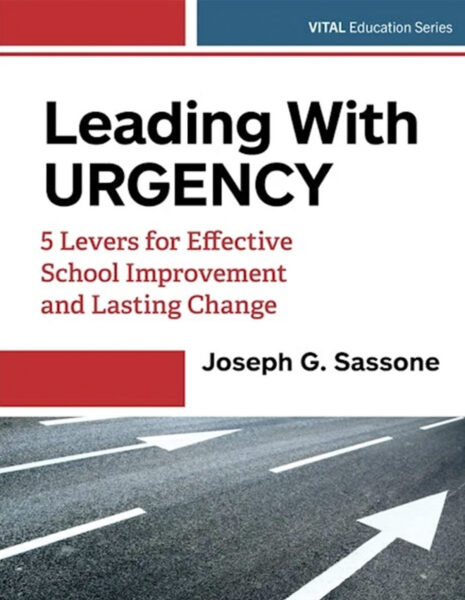
Education leaders have the power to sustain school improvement not just during their tenure but also for generations to come. That’s one of the key themes of Joseph Sassone’s new book, Leading With Urgency: 5 Levers for Effective School Improvement and Lasting Change.
Sassone is a school and district improvement senior facilitator at WestEd. Throughout his career, he has partnered with school and district leaders to help them overcome persistent and difficult systemic barriers to student success.
Informed by this experience, Leading With Urgency offers school leadership teams a new tool for navigating deep-seated challenges with resilient systems that defy setbacks. In this Q&A, Sassone shares the thinking behind the book and what he hopes readers take away from it.

Much of my career has been spent working alongside principals and school teams in some of the country’s most challenging schools. Time and again, I’ve watched dedicated educators tirelessly advocate for students while navigating poverty, trauma, chronic absenteeism, staffing shortages, initiative fatigue, and systems that don’t always work together.
But I’ve also seen something incredibly powerful: schools can change. I’ve witnessed remarkable transformation in even the most difficult circumstances when leaders bring focus, intentionality, and a genuine sense of urgency grounded in the belief that students simply cannot wait for us to improve. Leading With Urgency grew out of those experiences. I wanted to capture what I’ve learned from leaders who turn challenges into action and create meaningful, lasting change for students.
For me, urgency is not about panicking, moving faster, or reacting to the crisis of the day. It is about recognizing that students cannot wait and acting with intention and purpose. Leading with urgency means confronting difficult realities while building the trust needed to move forward. It’s believing deeply in what is possible for every child—and refusing to wait for ideal conditions to act.
The methodology was an intersection of research, practice, and lived experience. I didn’t begin by simply asking “What does the research say effective leaders should do?” The research is essential, but I also wanted to understand what leaders need to do to move persistently challenging schools forward.
Throughout more than 20 years of working alongside schools, districts, and school leaders, I began to see consistent patterns in the schools that made meaningful progress. Leaders needed to build relational trust and clarity, use time strategically, lead instruction, shift deeply held mental models, and implement change with purpose. Those patterns became the five levers.
One example that stays with me comes from my work with Navajo Tribal Schools. After extended school closures during the pandemic, one school emerged with extraordinary challenges. Student proficiency was essentially zero, chronic absenteeism exceeded 85 percent, and the student population was down by 50 percent. Despite these realities, the school community was determined to change its students’ trajectory.
Our work reflected all five levers. We focused on building relationships and trust, clarifying instructional priorities, using time more effectively, strengthening instructional leadership, challenging assumptions about what students could achieve, and maintaining disciplined implementation. This wasn’t about adding another initiative; it was about building a coherent approach to improvement.
Over time, academic outcomes improved by nearly 46 percentage points, and student attendance rose sharply. Most importantly, leaders and teachers built their own competencies and established sustainable systems and practices, creating the collective capacity to continue improving student outcomes well into the future.
Lead every day with intention and purpose.
School improvement doesn’t happen because of a single big decision or a new initiative. It happens through the decisions leaders make every day about people, time, instruction, expectations, and implementation. Leaders have to continually ask this question: “Is what we are doing moving us closer to better outcomes for students?” That mindset also demands persistence. The work is difficult, and progress rarely follows a straight line, but leaders cannot allow setbacks to become excuses for inaction.
Ultimately, I want leaders to think beyond their own tenure. One of the book’s most important concepts is building a legacy that outlasts you. Leadership isn’t about creating a school that depends on you; it’s about developing people, strengthening collective capacity, and building sustainable systems that continue to improve outcomes long after you are gone.
Explore VITAL and the VITAL Education Series
Leading With Urgency is part of the VITAL Education Series, a collection of books published by Teachers College Success. The books are informed by the success of WestEd’s VITAL Collaboration framework, which helps educators visibly improve teaching and learning. Learn more about VITAL Collaboration and explore the Related Resources band below to view other books in the series.

Ready to Support Your Thriving Learners and Empowered Communities?
Connect with our WestEd experts.
"*" indicates required fields
More Related to This Post
Blogs & Podcasts
Research insights and stories designed to inform, engage, and inspire.




Resources
Browse our high-quality publications and resources designed to inform and engage professionals in a variety of fields including K–12 education, early childhood, and health and justice.