

May 20, 2026
Educators often describe Algebra I as a gatekeeper to advanced mathematics and STEM coursework in high school. Policies vary in how students are selected to take Algebra I and when they should take it. For districts, these decisions about when and how students take Algebra I can have lasting implications for course pathways, access to advanced math, and student outcomes.
Welcome to Questions We Answer, our blog series in which WestEd’s mathematics experts respond to common questions from the field with practical tips and insights for educators and leaders.
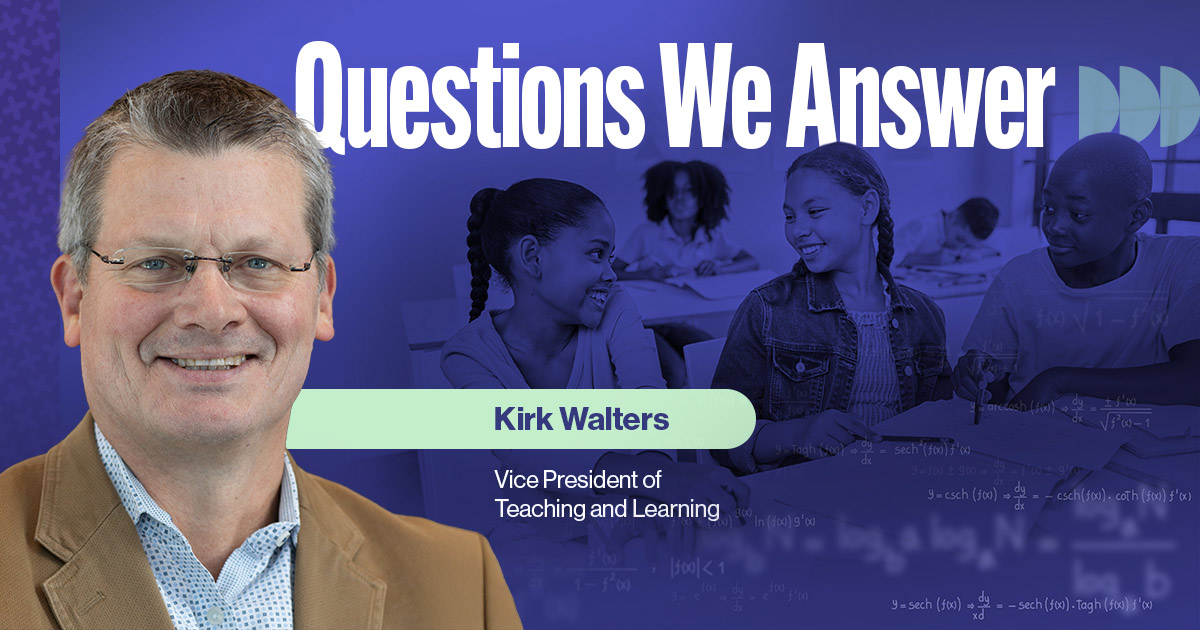
Kirk Walters is Vice President of Teaching and Learning at WestEd and a mathematics education expert who has led research and policy work focused on Algebra I in 8th grade. A former 8th grade algebra teacher, he continues to draw on classroom experience to inform his research. We asked him:

The short answer is yes. Students who are ready to take algebra in the 8th grade benefit from the course. Compared to students who were underprepared or overlooked, algebra-ready students are more likely to be on an advanced math trajectory in high school and less likely to have to double up (take more than one math class in a year) to reach calculus.
What Districts Can Do to Expand Access
Most schools offer 8th grade algebra. However, about one quarter of schools in high-poverty communities do not offer it, a rate 3 times higher than in low poverty communities. This creates an 8th grade algebra opportunity gap across school contexts. Schools in higher poverty and rural communities also often have a particularly tough time finding qualified algebra teachers. These staffing challenges can place additional pressure on teachers, especially those teaching Algebra I for the first time without targeted professional development.
Technology can help expand access to courses and support teacher learning. A randomized controlled trial in Maine and Vermont found that an online algebra course improved outcomes for rural 8th graders with access to it, suggesting that technology may help students access high-quality algebra courses. Teachers also have access to an increasing number of high-quality synchronous and asynchronous professional development resources. Districts can take practical steps to bridge the gap.
How Districts Can Define and Rethink Algebra Readiness
States, districts, and schools also vary widely in when they identify students as algebra ready. The criteria typically include some combination of prior math achievement, teacher recommendation, and parental advocacy.
When students are deemed algebra ready also varies widely across states, districts, and schools. Texas, for example, identifies algebra-ready students based on their 5th grade math assessment scores and is seeing increased 8th grade algebra enrollments through this approach.
What a Systemic K–8 Approach Looks Like in Practice
Eighth-grade algebra is a gateway to broader, more advanced math and science options for students. It matters, then, that students develop their understanding of concepts and skills foundational to algebraic reasoning to succeed in the future. But 8th grade algebra teachers can’t make this happen alone.
Helping 8th graders master algebra requires a systemic approach that begins in the early grades, when young children can and should start developing algebraic thinking. School systems that weave algebraic concepts and skills throughout K–8 are more likely to prepare students and teachers for success in 8th grade algebra and beyond. It’s worth asking your local school system how they approach 8th grade algebra, including how they define algebra readiness and whether they take a more systemic approach.
Stay tuned as we continue to provide practical answers to the most pressing questions in mathematics education.
Support for Districts Rethinking 8th Grade Algebra
If you would like to learn more about Algebra I policies that expand opportunity and support strong learning outcomes, WestEd partners with districts and states to connect research and practice and support coherent mathematics systems, from early learning through postsecondary education.

Ready to Support Your Thriving Learners and Empowered Communities?
Connect with our WestEd experts.
"*" indicates required fields
More Related to This Post
Blogs & Podcasts
Research insights and stories designed to inform, engage, and inspire.




Events
Research insights and stories designed to inform, engage, and inspire.

Resources
Browse our high-quality publications and resources designed to inform and engage professionals in a variety of fields including K–12 education, early childhood, and health and justice.