


WestEd staff will lead, present, chair, or serve as discussants in 34 sessions and meetings at the American Educational Research Association (AERA) Annual Meeting, April 8–12, 2026, in Los Angeles, California, and in 4 sessions at the National Council on Measurement in Education (NCME), which meets concurrently April 8–11. Whether you’re exploring literacy learning, artificial intelligence (AI), mathematics, or beyond, our experts can help you move from insight to action. Learn more about our AERA and NCME sessions.
This resource collection, curated for AERA and NCME Annual Meeting attendees, offers research papers, blog articles, and websites, reflecting WestEd’s commitment to rigorous research and practical, ready-to-use resources designed to inform and engage professionals in a variety of fields. This collection offers resources on a range of topics, including
- responsible AI integration in education,
- curricular resources for mathematics,
- K–12 disciplinary literacy,
- technology in education
- and support for Multilingual Learners.
Access our curated list of resources below – we look forward to connecting with you at the conference!
Ready to connect beyond the conference?
Get in touch with a WestEd expert.
"*" indicates required fields
Featured Websites:

Center for Standards, Assessment, and Accountability
The Center for Standards, Assessment, and Accountability is an organization that helps schools and education systems design fair, student-centered assessments; improve teaching through data, and build balanced systems that support student learning and accountability.

Disciplinary Literacy
The Disciplinary Literacy team at WestEd supports teachers in using research-based instructional frameworks, including Reading Apprenticeship® and Writing Apprenticeship®, that help students read, write, and think like historians, scientists, mathematicians, and literary critics.

National Center for Systemic Improvement
The National Center for Systemic Improvement (NCSI) builds capacity for state education agencies to implement strong general supervision systems, lead effective instruction, and succeed with organizational design and talent management and retention, with the goal of realizing positive outcomes for students with disabilities.

Research–Practice Partnership Network
WestEd’s Research–Practice Partnership (RPP) Network connects educational agencies with WestEd researchers to codevelop tailored research agendas, turning evidence into actionable insights that support effective teaching, decision-making, and improved outcomes for every learner.

Western Educational Equity Assistance Center
Authorized under Title IV of the Civil Rights Act of 1964, the Western Educational Equity Assistance Center (WEEAC) at WestEd works to ensure all K–12 students have equitable access to high-quality education regardless of race, sex, national origin, or religion, serving 16 states and territories across the West.
Featured Publications:
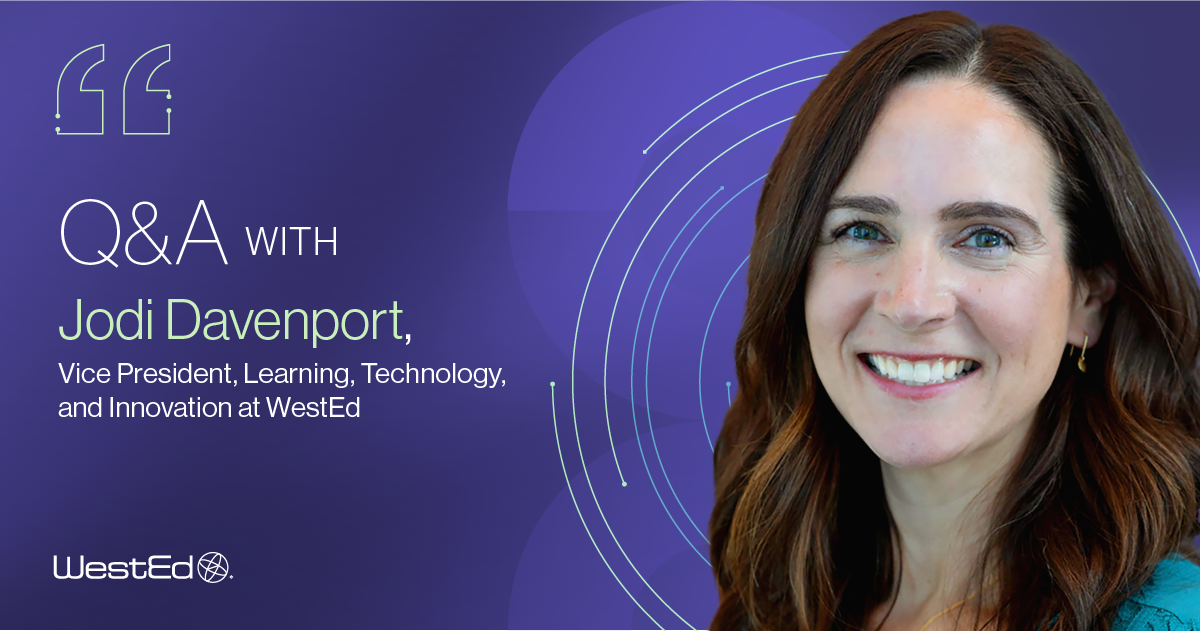
AI Readiness in Education: A Q&A With WestEd’s Jodi Davenport
In this Q&A, WestEd’s Vice President of Learning, Technology, and Innovation shares how education leaders at every stage of AI exploration can build shared understanding, strengthen professional confidence, and approach AI implementation in ways that remain grounded in people and purpose.
Finding the Sweet Spot for English Learner Reclassification: A Study of California’s Criteria
By Molly Faulkner-Bond
This study, conducted in partnership with the California Department of Education, examines whether California’s four-criteria standard for exiting English Learner status is rigorous, fair, and necessary—offering policymakers and advocates timely evidence on one of the state’s most consequential classification decisions.
The Impact of NBA Math Hoops on Students’ Math Achievement: A Randomized Controlled Trial
By David McKinney, Kirk Walters, Khamia Powell, Edrick Sabalburo, and Chloe Morton
This randomized controlled trial finds that students in NBA Math Hoops classrooms scored significantly higher than their peers in other STEM enrichment settings, providing rigorous evidence for a widely used, low-cost math acceleration program well suited to out-of-school-time settings.
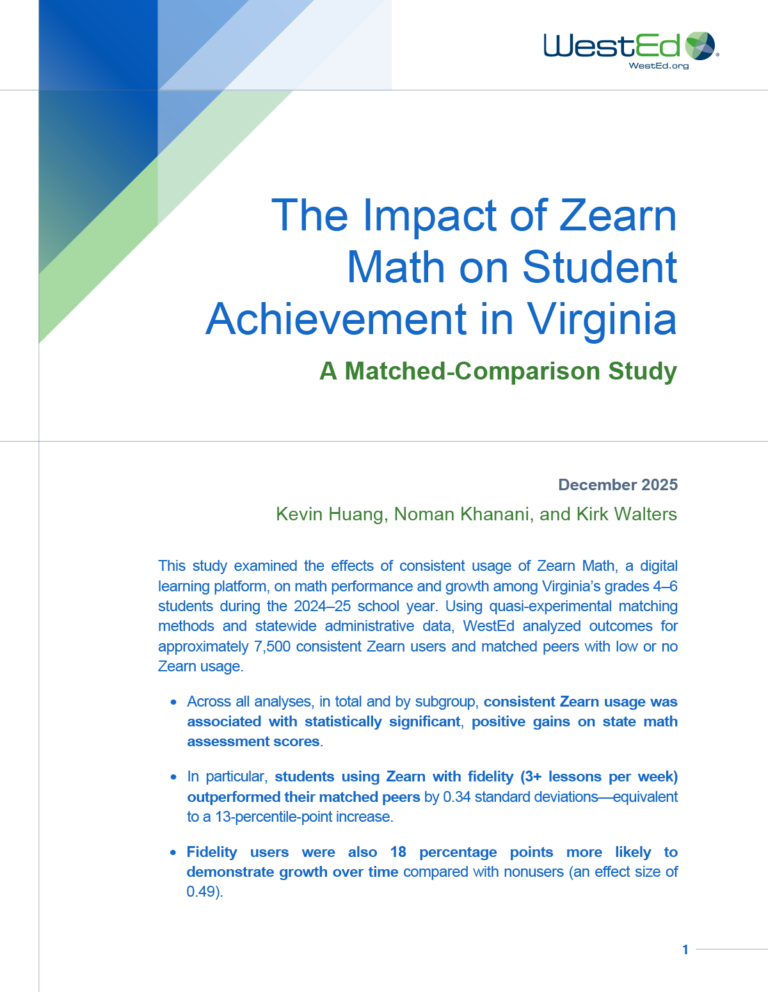
The Impact of Zearn Math on Student Achievement in Virginia
By Kevin (Chun-Wei) Huang, Noman Khanani , and Kirk Walters
This brief examines the impact of Zearn Math on grades 4–6 students in Virginia’s Math High Impact Statewide Tutoring Program, finding that students who used the platform most consistently demonstrated stronger math achievement and growth across grades and demographic subgroups.
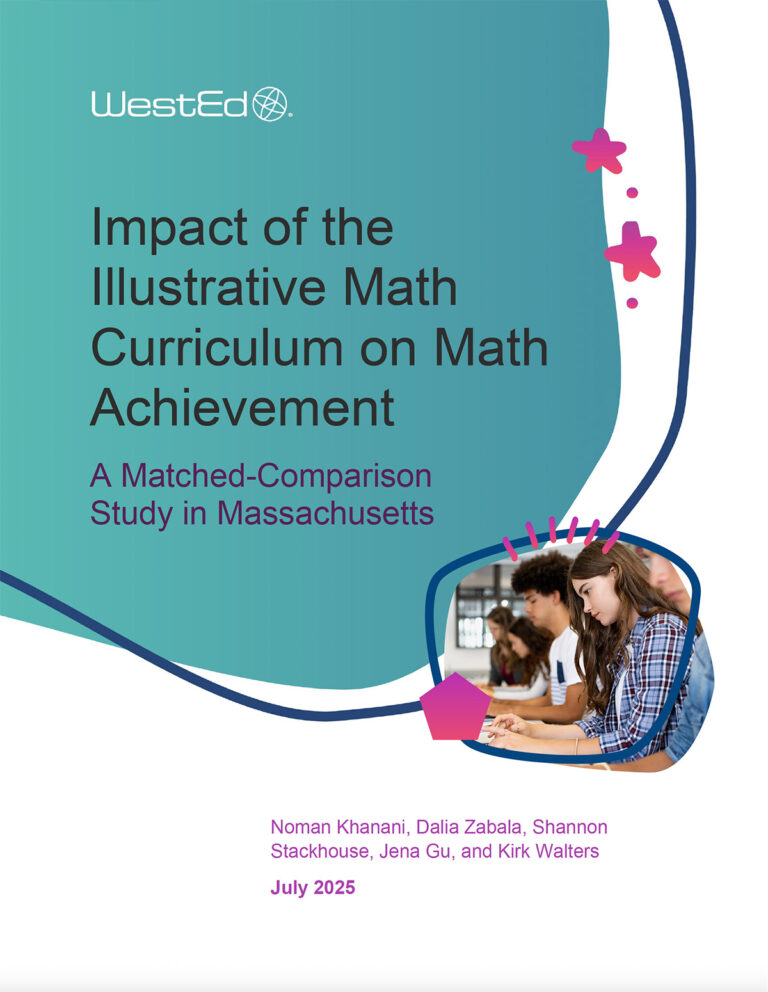
Impact of the Illustrative Math Curriculum on Math Achievement
By Noman Khanani, Dalia Zabala, Shannon Stackhouse, Jena Gu, and Kirk Walters
Using data from 71 Massachusetts middle schools, this study provides the first causal evidence on the widely adopted Illustrative Math curriculum, finding meaningful gains in schools that implemented it before the pandemic—and highlighting how implementation conditions shape curriculum effectiveness.
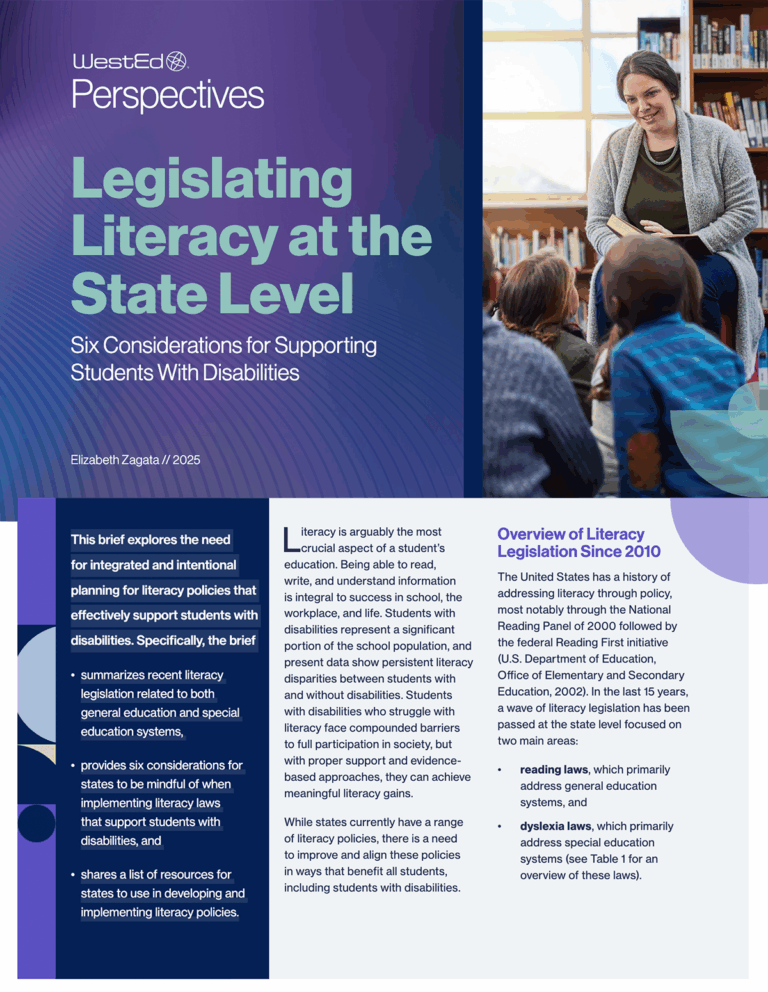
Legislating Literacy at the State Level: Six Considerations for Supporting Students With Disabilities
By Elizabeth Zagata
This paper discusses the importance of inclusive literacy policies and offers strategies for effectively meeting the diverse needs of Multilingual Learners and students with disabilities.
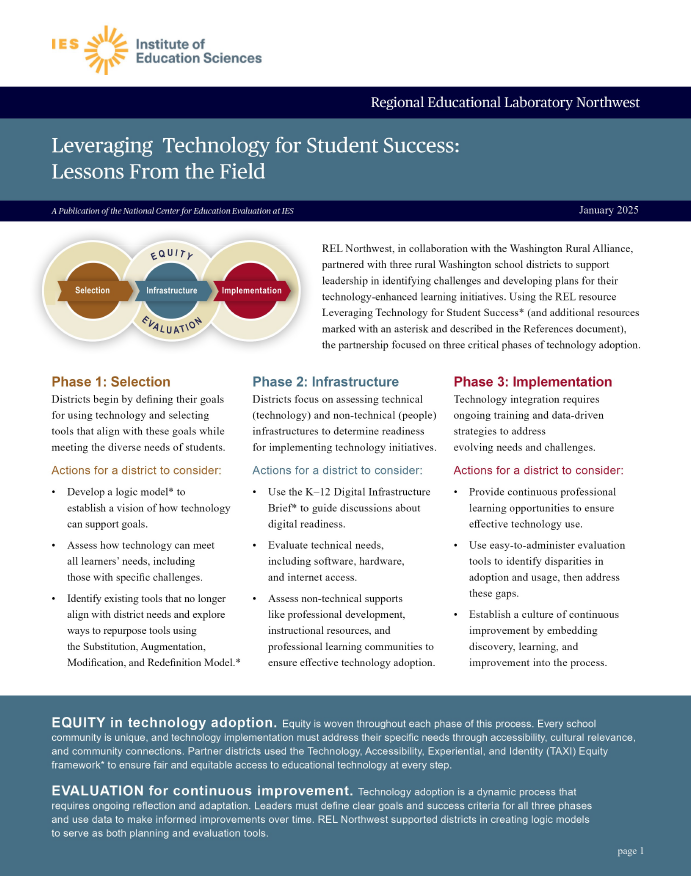
Leveraging Technology for Student Success: Lessons From the Field
By Regional Educational Laboratory (REL) Northwest
This resource draws on the experiences of three rural Washington school districts to offer practical guidance for district leaders on selecting technology tools, evaluating infrastructure, and planning for continuous evaluation as part of effective technology-enhanced learning initiatives.

New Research on Early Literacy Laws and Multilingual Learners: Lessons From Massachusetts
By Molly Faulkner-Bond, Aaron Soo Ping Chow, and Mariann Lemke
This blog post summarizes key findings from a WestEd study conducted in partnership with the Massachusetts Department of Elementary and Secondary Education, examining how early literacy screening policies affect Multilingual Learners and what states can do to ensure these tools work equitably for all students.
Refining Statewide School Accountability Systems: Lessons From Innovative State Approaches Under ESSA
By Mitch Herz and Mel Wylen
Drawing on four detailed case studies, this paper documents how states are rethinking their accountability systems to better align improvement efforts with student outcomes, highlighting promising practices that can guide both state and federal policymakers.
Stuck at Red: Persistent Early Literacy Gaps and Later State Test Performance
By Mariann Lemke, Aaron Soo Ping Chow, Brandon LeBeau, and Sarah Quesen
This brief examines Massachusetts early literacy screening data from 2021 to 2024 and finds that most students flagged as at risk remain so in subsequent years—underscoring the urgent need for earlier, more targeted interventions to improve long-term reading outcomes.
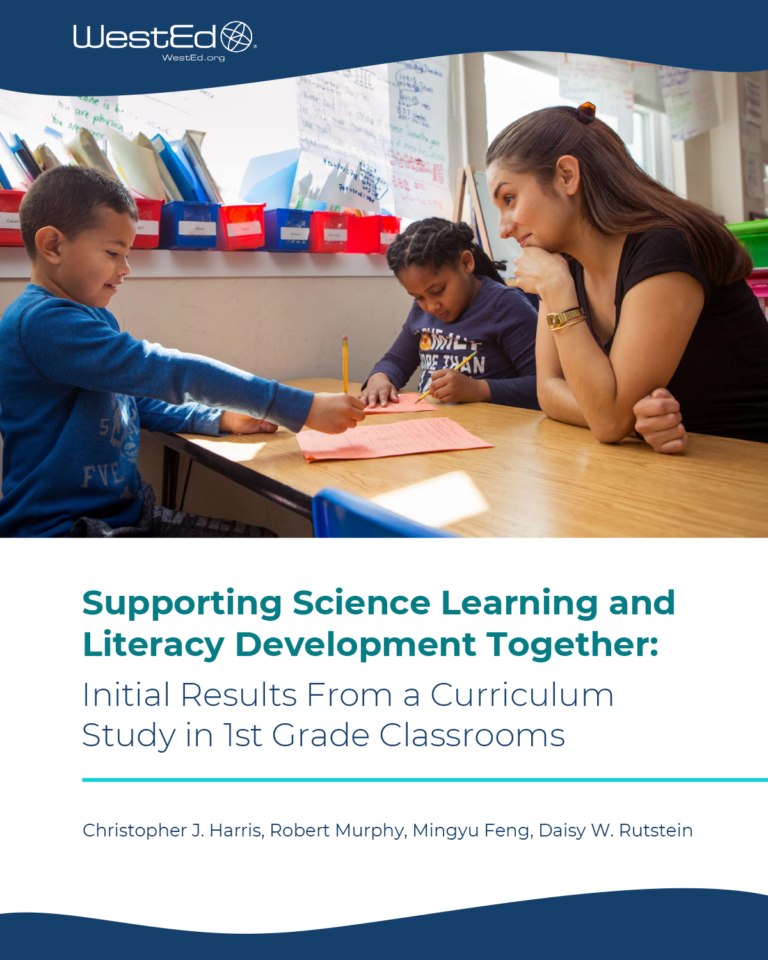
Supporting Science Learning and Literacy Development Together: Initial Results From a Curriculum Study in 1st Grade Classrooms
By Christopher Harris, Robert Murphy, Mingyu Feng, and Daisy Rutstein
This report presents findings from a randomized controlled trial of the NGSS-designed Amplify Science K–5 curriculum, showing that integrated science and literacy instruction can improve students’ science proficiency, enrich their vocabulary, and support their reading development simultaneously.
Systems Reviews: Building Coherence, Increasing Efficiency, and Improving Workflow at State Educational Agencies
By Heather Mattson, Jennifer Zoffel, and Malachy McCormick
This paper describes WestEd’s structured yet flexible systems review process, which helps state educational agencies assess coordination, build leadership capacity, and align their work with long-term state priorities for sustainable, meaningful improvement.
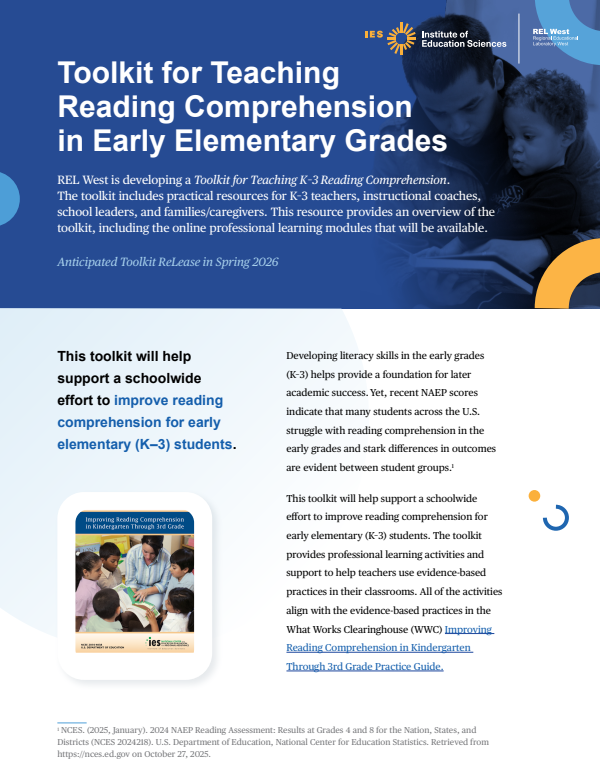
Toolkit for Teaching Reading Comprehension in Early Elementary Grades
By REL West
This fact sheet previews a forthcoming REL West toolkit for K–3 reading comprehension instruction that is grounded in practices from the What Works Clearinghouse practice guide and designed to support teachers in building strong foundational literacy skills in the early grades.

Turning Research Into Results: WestEd Experts Share Insights on Educational Excellence
This blog post spotlights three areas in which WestEd helps educational leaders put evidence into practice: community-driven program evaluation, research–practice partnerships, and data-informed strategies for English Learner success.
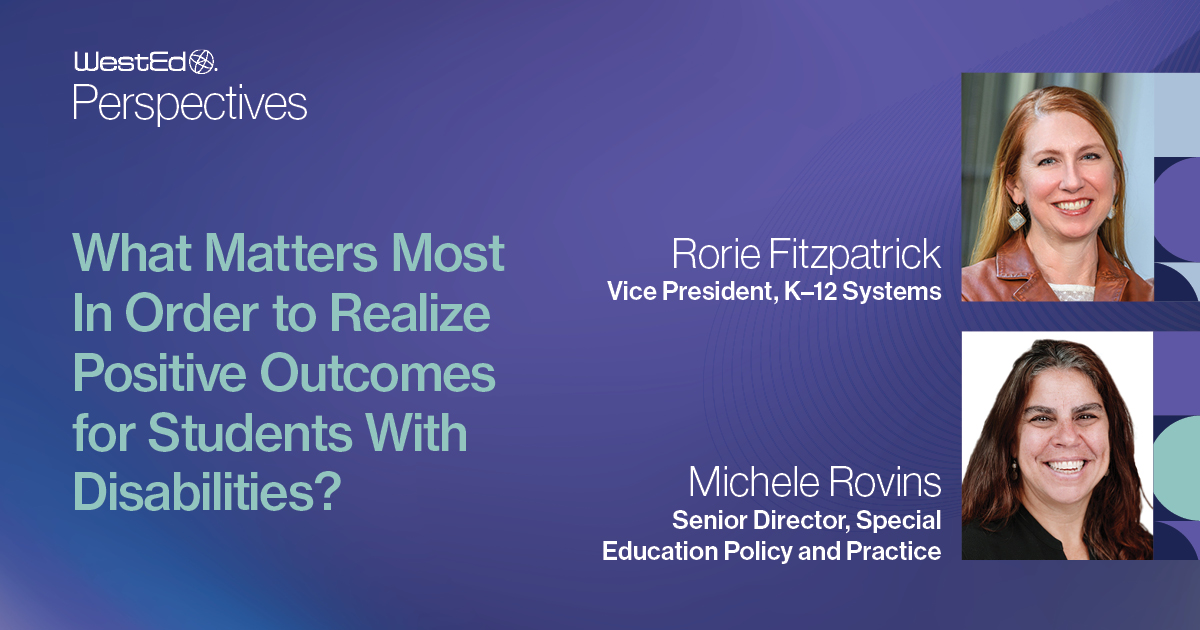
What Matters Most in Order to Realize Positive Outcomes for Students With Disabilities?
By Rorie Fitzpatrick and Michele Rovins
This blog post outlines five key constructs—from accurate identification and outcomes-focused IEPs to effective general supervision—that state and local leaders should prioritize to meaningfully improve academic and behavioral outcomes for students with disabilities.
More Related to This Resource
Blogs & Podcasts
Research insights and stories designed to inform, engage, and inspire.