

Product Information
Copyright: 2026
Format: PDF
Pages: 8
Publisher: WestEd
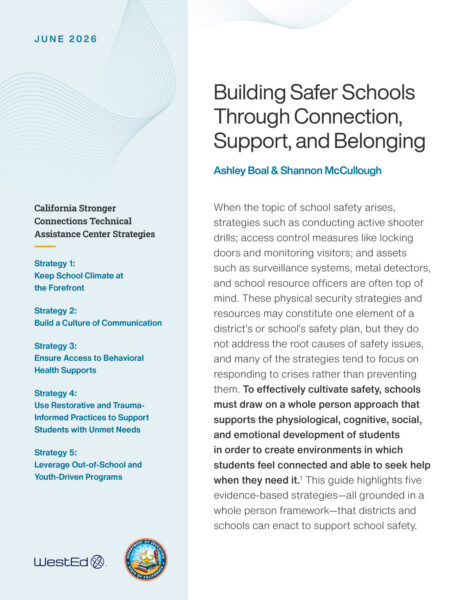
School safety efforts often prioritize physical security and crisis response, yet these measures rarely address the root causes of safety concerns. A growing body of evidence points to a different path: preventing harm by strengthening connection, support, and belonging so that students feel both seen and supported and that they are part of their school community.
This guide combines research evidence with practical guidance, pairing five evidence-based school safety strategies with actionable recommendations and examples from California school districts. The five strategies are (a) fostering a positive school climate, (b) building a culture of open communication, (c) ensuring access to behavioral health supports, (d) using restorative and trauma-informed practices, and (e) leveraging meaningful youth engagement through out-of-school programs. Together, they offer county, district, and school leaders; safety administrators; and behavioral health professionals a whole-person approach to preventing escalation and building safer school communities.
Authors
Ashley Boal
Shannon McCullough
More Related to This Resource
Resources
Browse our high-quality publications and resources designed to inform and engage professionals in a variety of fields including K–12 education, early childhood, and health and justice.