Students who are chronically absent—missing 10 percent or more of school days annually—are at a significant risk of falling behind and not graduating. Chronic absenteeism affects all students, from kindergarten to high school, and chronically absent students lag academically and developmentally compared to their regularly attending peers.
This page features videos and resources on how schools and districts can implement multi-tiered systems of support to improve student attendance.

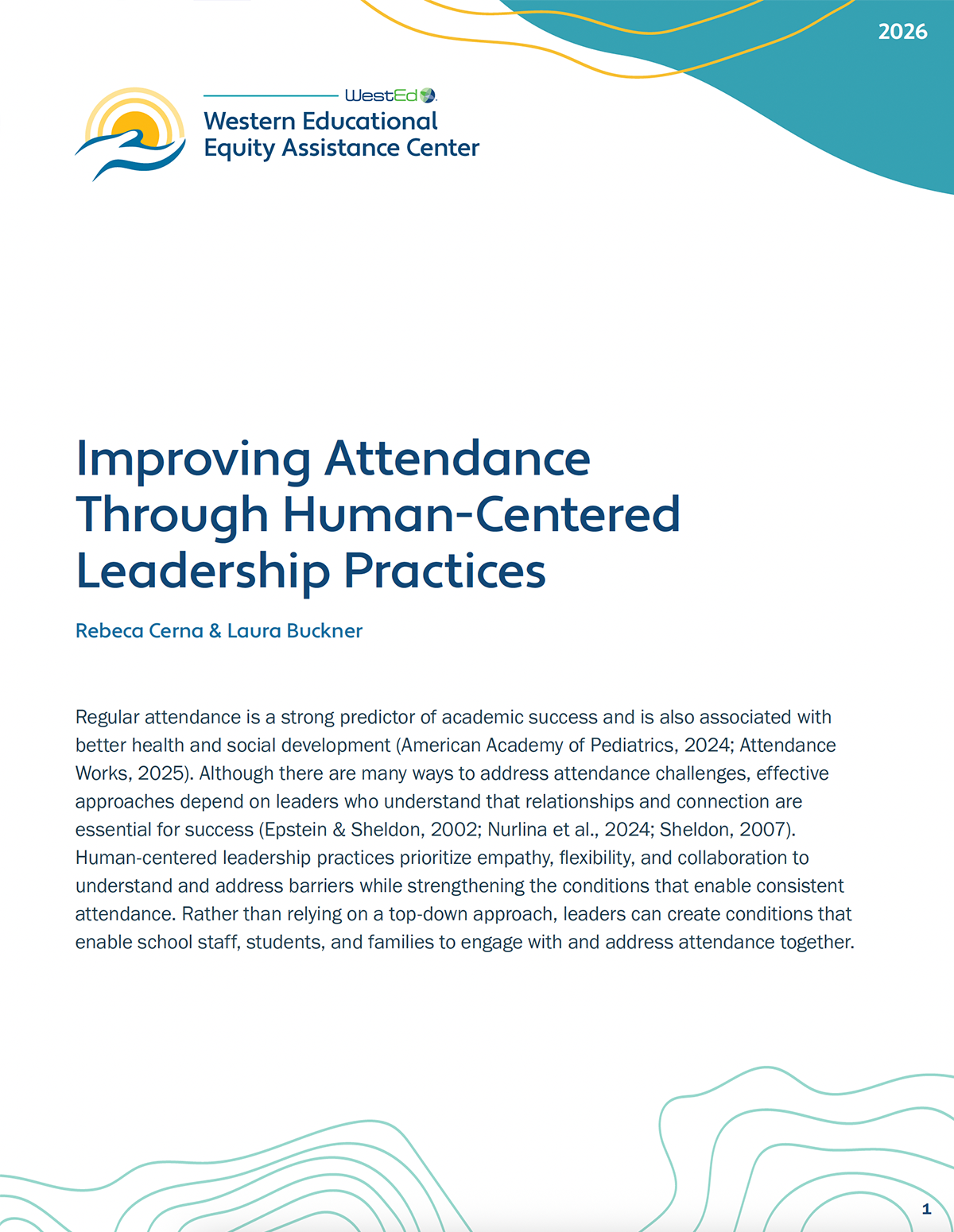
Improving Attendance Through Human-Centered Leadership Practices
By Rebeca Cerna and Laura Buckner
Introduces human-centered leadership practices for improving attendance and shows how education leaders can address the root causes of absenteeism by examining their own mindsets, collaborating with staff and families, and adapting policies to better support students least served by current approaches.

Infographic: Data Visualization Can Help Educators Address Chronic Absence
Provides examples of data visualizations using bar charts, line graphs, and maps, explaining what the chronic absence data reveal and offering possible next steps for school and district leaders.
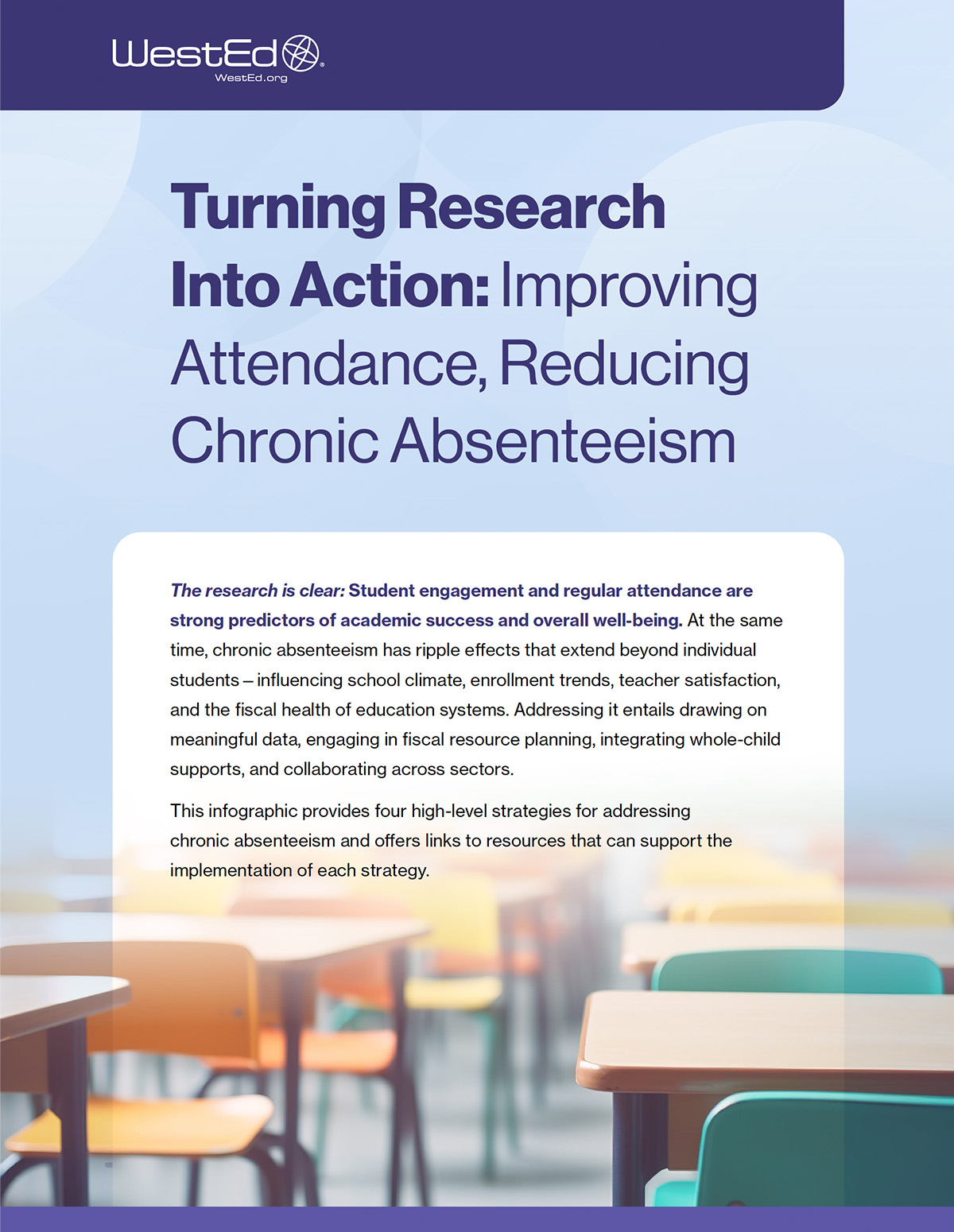
Turning Research Into Action: Improving Attendance, Reducing Chronic Absenteeism
By Dana Grayson, Lenay Dunn, and Rebeca Cerna
Explore four strategies to address chronic absenteeism and its impact on enrollment, school climate, and fiscal health in this infographic.

Ending Chronic Absence Starts With Early Action and Strong Partnerships
Cecelia Leong of Attendance Works and Rebeca Cerna of WestEd share insights and strategies on tackling chronic absenteeism, highlighting California’s progress and practical steps to improve student attendance and engagement.
Every Student, Every Day: A Multi-Tiered Approach to Reducing Chronic Absence in Elementary School
Using Attendance Data for Decisionmaking: Strategies for State and Local Education Agencies
Discusses the presenters’ “deep dives” into student attendance data, including understanding the reasons that students are absent and building effective interventions to address them.
School District Examples
Attendance Matters! Kerman Unified School District
Provides insight into districtwide approaches supporting chronically absent students and “whatever-it-takes” strategies that are particularly promising in the elementary grades.
Attendance Matters! Parlier Unified School District
Highlights a community “superhero campaign” that uses data, positive messaging, and intensive student and family support to reduce chronic absenteeism.
Attendance Matters! Tulare City School District
Promotes attendance by attempting to reduce common health-related absences via a handwashing campaign in Tulare City School District.
Reducing Chronic Absenteeism: Every Day Counts!
Discusses the prevalence, causes, and effects of chronic absence and shows how three Utah schools improved attendance by fostering schoolwide attendance cultures, using data to track at-risk students, and providing personalized outreach and support.
More Related to This Resource
Resources
Browse our high-quality publications and resources designed to inform and engage professionals in a variety of fields including K–12 education, early childhood, and health and justice.


Blogs & Podcasts
Research insights and stories designed to inform, engage, and inspire.