

September 17, 2026
The goal is to move from simply learning about leadership to creating a shared way of leading—where the language, tools, and expectations from the Playbook become part of how we meet, solve problems, build relationships, design systems, and lead the district’s work.
— Dr. Raymond Andry
Superintendent, Mountain View School District
Today’s superintendents are managing constant change: staff turnover, shifting priorities, new initiatives, and the daily pressures of running a district.
For Superintendent Dr. Raymond Andry of Mountain View School District in El Monte, California, those demands underscored the need for stronger leadership capacity across the system. As longtime staff retired and new leaders joined the district, he saw an opportunity to rebuild leadership practices, create stronger pathways for leadership development, and establish shared routines and ways of working that could help the district navigate change.
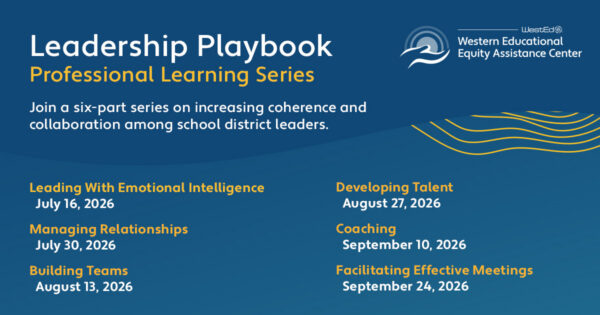
Those priorities led the district to WestEd’s Leadership Playbook, a research-based professional learning series that helps school and district leaders build leadership capacity to drive meaningful and lasting improvement.
In this Q&A, Dr. Andry shares how Mountain View School District is strengthening leadership and creating the conditions for that work to endure.

Dr. Andry: One of the things I was particularly interested in when I became superintendent was building a leadership pipeline within the district. Coming out of COVID, I saw that much of the leadership work that had developed over the years had been disrupted. Principals and directors who had previously focused on cultivating instructional leadership, developing people, and leading across multiple dimensions had, out of necessity, shifted heavily toward management—managing facilities, operations, staffing, and the immediate challenges in front of them. As a result, some of our instructional leadership practices, as well as the norms around how we lead and work with people, seemed to have dissipated.
At the same time, I didn’t see enough intentional pathways for employees throughout the district to develop and practice leadership. There are natural leadership opportunities in every role. Still, we were not necessarily using them to help people build their skills or prepare for greater responsibility—whether that meant advancing within the teaching or classified ranks or eventually moving into management.
One experience that reinforced this for me involved a custodian who had been applying for promotional opportunities and asked me for some coaching. As we worked through his previous interviews, it became clear to me that he was a natural leader. The challenge was that he did not yet have the language or the specific skills to articulate his leadership abilities in a way others could easily recognize in an interview. He was already demonstrating leadership; he just had not been allowed to develop it intentionally, reflect on it, and learn how to communicate it.
Experiences like that helped clarify what I believed we needed to focus on as a district. Leadership development cannot simply be about the position someone holds or the task they are responsible for. The more important questions are, How are you leading the work? How do you build relationships, influence others, communicate expectations, develop people, solve problems, create systems, and move a team toward a shared goal?
Those were the areas where I saw gaps, but they also represented an opportunity. If we intentionally develop those leadership capacities throughout the organization, we could strengthen leadership within people’s current roles while also creating a stronger pipeline for those who aspire to take on greater leadership responsibilities in the future.
Dr. Andry: I first recognized the need with the newer members of our management team. We had a significant number of new leaders coming into the district at the same time that many employees who had been here prior to COVID were leaving or retiring. With those transitions, we were also losing some of our institutional memory—particularly around how we treat one another, how we work together, and what leadership is supposed to look like in Mountain View.
At the same time, I had been talking with our association presidents about developing the leadership capacity of their representatives. I saw an opportunity for us to approach leadership development as a partnership rather than something that belonged only to management. I told each association president, “You choose 20 people—whoever you want. I have no say in who you select because this is about developing your team and your leadership. I’ll bring 20 people from the management side, and we’ll bring everyone together to learn in the same space.”
That shared learning was important because I was seeing that we didn’t always have a common understanding of what leadership looked like or how leaders should work with others. When people operate from different assumptions about leadership, it can create unnecessary conflict, even when everyone is trying to accomplish the same thing.
The Leadership Playbook provided a common framework and language for that work. It also aligned closely with what I believed Mountain View should be about as an organization: collaboration, trust, and strong relationships and giving people the agency to lead from wherever they are in the organization. It gave us a way to begin rebuilding a shared understanding of leadership across roles and employee groups rather than treating leadership development as something reserved only for people with management titles.
Dr. Andry: It’s easy to have a great day of professional development, walk away with good intentions, and then lose the learning once the day-to-day work and inevitable crises take over. From the beginning, I wanted to make sure the Playbook did not become another professional development experience that people attended and then put aside.
One thing that helped was that I had already been talking with our leaders about emotional intelligence and understanding different working styles, and Playbook One reinforced many of those same concepts. I started with simple ways to keep the learning present. For example, during meetings, I might ask people to get into groups based on common working styles. Those small reminders helped reinforce the language and concepts without making the work feel like a separate initiative.
I also made a deliberate decision to forgo my monthly management team meetings so that time could be devoted to this work. Over time, I began incorporating elements of the Playbook into Cabinet, Extended Cabinet, principal meetings, and district building meetings. By the end of the first year, I framed my Superintendent’s Administrative Retreat around many of those same leadership concepts and intentionally aligned it with how they had been introduced in the Playbook.
From there, we began connecting the learning to actual organizational work. We used the concepts as we considered redesigning how the district office operates, strengthening relationships, and improving our approach to difficult conversations. The Playbook became less about individual professional development and more about how we wanted to work together as an organization.
More recently, that work has expanded into our focus on initiative design and systems thinking. We have spent considerable time developing a shared understanding of what constitutes a system, what constitutes an initiative, and how the different parts of our organization should work together. As we launch this school year, we are intentionally aligning the Playbook sessions with the organizational structures we have put in place and identifying the common leadership tools and practices we agree to use.
The goal is to move from simply learning about leadership to creating a shared way of leading—where the language, tools, and expectations from the Playbook become part of how we meet, solve problems, build relationships, design systems, and lead the district’s work.
Dr. Andry: We’ve completed the formal training with WestEd through Playbook One and Playbook Two, so the next phase of our work is focused on coaching. I offered every member of the management team the opportunity to participate because I know I cannot lead and sustain this work on my own. Developing leadership capacity means providing people with the support and space they need to work through challenges, reflect on their leadership, and continue to grow.
Coaching provides a safe environment where leaders can be vulnerable, wrestle with difficult issues, and strengthen their practice before bringing that work back to their teams. As superintendent, I recognize that there are limits to the kind of space I can provide because I’m still their supervisor.
Through our continued partnership with WestEd, I hope to deepen individual leadership capacity while creating greater consistency in how we lead across the district. The goal is for our leaders to have the confidence, tools, and shared practices to carry this work forward, making leadership development sustainable throughout Mountain View School District.
Dr. Andry: Yes, and those routines have become stronger and more embedded over time. Each year, we revisit our emotional intelligence assessments, and we now use the Playbook’s North, South, East, and West framework to help people understand different working styles. It has given us a common language for discussing how we approach our work, how we interact with one another, and how those differences can affect how teams function.
We have also incorporated tools from Playbook Two into our broader district work. One example is the Knoster Model, which we use to examine how implementation is progressing across the district and to identify where something may be breaking down. It helps us move beyond simply saying that an initiative is not working and instead asking more specific questions about what might be missing or getting in the way of successful implementation.
That is a tool we likely would not have incorporated into our district practices had we not been introduced to it through the Playbook. Over time, these tools have moved beyond the training itself and become part of the routines and common language we use to understand one another, evaluate our work, and improve how we lead across the district.
Dr. Andry: The management team is my team, and I believe it’s important for me to be present and participate in the learning alongside them. When the superintendent doesn’t show up, it can unintentionally send the message, “I already know this, so I’m sending you to go fix yourself.” That is not what this work is about. Many of the concepts in the Playbook are not necessarily new to our team members or to me. What is new is how we will use them collectively to move the organization forward. We are all on the same playing field, building our capacity together.
When we walk into professional development, I ask people to check their titles at the door. In that space, it’s not about your position in the organization; it’s about how we build our collective capacity to lead. We all have different roles and responsibilities, and those responsibilities matter, but leadership is something different.
Leadership is about how we move the district’s culture, climate, and priorities forward while maintaining trust, building community, and creating an environment where people feel they belong and their contributions are valued. That responsibility belongs to all of us. My participation reinforces that I’m part of the learning, not separate from it, and that developing our leadership capacity is shared work.
Dr. Andry: Superintendents need opportunities to pause, reflect, and learn alongside their teams. You cannot fully understand or develop a leadership culture while standing outside of the learning. Participating together creates space to ask important questions: Who are we collectively as leaders? How do our individual strengths, needs, working styles, and emotional intelligence influence the way we work together?
I see leadership development differently now. It’s less about the “what” and more about the “how.” How we communicate, build trust, develop people, and move the organization forward together. People want to understand why the work matters and feel connected to its purpose. For leadership development to become part of a district’s culture, it has to be embedded in how people work together every day. As superintendents, we have to understand what our current and emerging leaders need, create opportunities for their growth, and align that development with the district’s goals and priorities, all while keeping the success of our students and families at the center.
Dr. Andry: The commitment begins with moving away from program thinking and focusing instead on the structures we leave behind. A program I believe in today may eventually change or no longer meet our needs, but the structures we use to identify needs, evaluate options, make decisions, and determine what is best for our students can endure.
For me, it’s about stepping back and reflecting on the organization’s legacy. How do we make Mountain View nimble, responsive, and accountable so that it can adapt to whatever conditions arise, including those we cannot anticipate today? That requires building structures, routines, and shared practices that people understand, value, and consistently use. If those structures become part of how the organization operates, rather than being dependent on a particular program or individual leader, they can continue to guide the district well into the future.
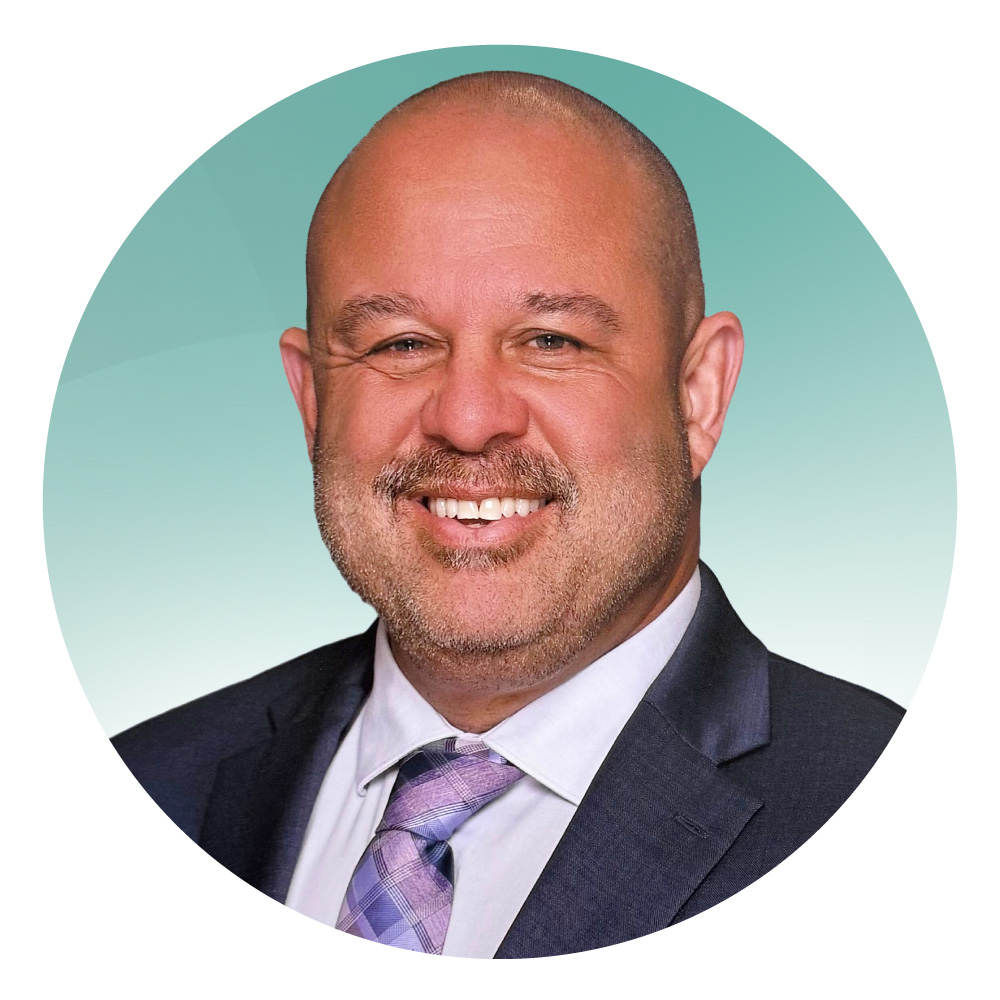
Raymond Andry, EdD, is superintendent of Mountain View School District (MVSD), serving El Monte and South El Monte, where he leads the district’s focus on literacy, math, student and family voice, community schools, and expanded learning opportunities that prepare students for success in high school and beyond. Previously, Andry served for seven years as MVSD’s assistant superintendent of educational services and five years as principal of Kranz Intermediate School, after earlier roles in the Montebello and Los Angeles Unified School Districts.

Ready to Build Leadership Capacity Across Your School or District?
Connect with our WestEd experts.
"*" indicates required fields
More Related to This Post
Blogs & Podcasts
Research insights and stories designed to inform, engage, and inspire.

Events
Research insights and stories designed to inform, engage, and inspire.