

November 23, 2026
Across the country, state early childhood systems bring together agencies, providers, and community organizations to support young children and families. Yet coordinating efforts across these different parts of the system, identifying shared priorities, and understanding where progress is being made can be challenging.
In Hawaiʻi, the Executive Office on Early Learning (EOEL) is working to strengthen coordination across the state’s early childhood system through a shared vision informed by the communities it serves. In partnership with WestEd, EOEL engaged families, educators, and community partners across Hawaiʻi’s island communities to develop Hawaiʻi’s Early Childhood State Plan that reflects their collective priorities. WestEd also supported the development of Hawaiʻi’s Early Childhood System Snapshot, which brings together key data indicators to provide a more comprehensive picture of the system and establish a baseline for tracking progress over time.
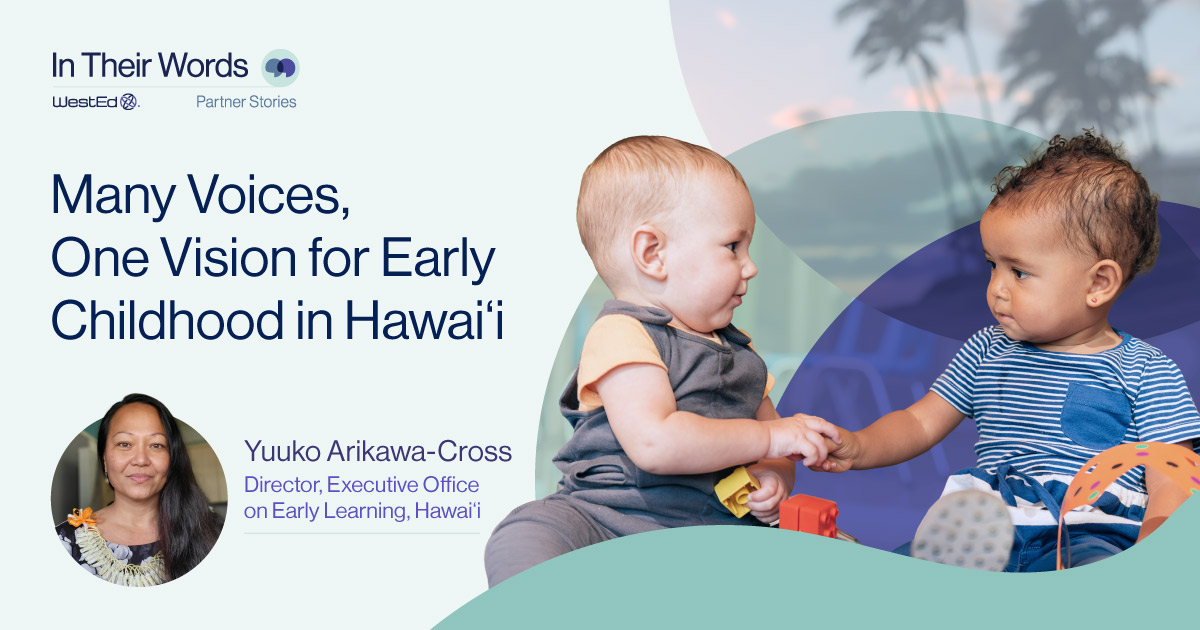
In this Q&A, Yuuko Arikawa-Cross, Director of EOEL, shares what it takes to bring people with diverse perspectives together and build a more responsive early childhood system for children and families.
This Q&A has been edited for clarity and length.
When you stepped into this role, what did you recognize was needed to better understand and address the needs of young children and families across the state?
One of the things that I value is people who have different backgrounds and experiences, whether educational or professional. Sometimes you can teach skills and knowledge, but sometimes a person’s disposition is the most critical factor.
When I moved into this space, some people felt like you could only really contribute if you had an early childhood background or had been in the classroom. While that’s very valuable, we also need people who have business, legislative, research, or strong data backgrounds.
We have an institutional analyst in our office who is originally from Japan. She’s a dentist who came to Hawaiʻi, worked for the judiciary, and then did outreach. What was so powerful about her experiences was the way they taught us how to meet families where they are. She asks how somebody who doesn’t speak English as their first language, or somebody who’s newly arrived, might perceive the same situation. It really helps us with our messaging and how we approach interactions with the broader early childhood community.
What was needed was the invitation for many people to be part of the transformation of the early childhood system.
Hawaiʻi’s Early Childhood State Plan outlines a shared vision for young children and families. What did it take to develop that vision across so many agencies, organizations, and communities?
When I recruit people to be part of our team, I ask what their belief about leadership is, how they’ve been a leader in their roles, and how they approach challenges. Even more than content knowledge, that’s really important to me. If we share the belief that you can be a leader in whatever role you’re in, you start to value people in diverse roles and help elevate their capacity to lead.
We were intentional about ensuring representation from each of our island communities. We went and searched and invited, and we continue to extend the invitation. If you know somebody we’ve left off, invite them. If somebody isn’t sitting at the table, let us know. You may be a neighbor or family member, or you may be trying to hire an employee who can’t find care. We’re all connected in some way.
At the end of the day, we’re trying to build healthy people and healthy communities and a healthy Hawaiʻi. It takes everybody to uplift the effort. Our office can’t do it on our own, so we have to collectively empower and embrace people to help uplift the work.
What experiences shaped your belief that leadership isn’t limited by a person’s role or title?
I don’t think it’s our job to limit people’s potential. In my second year of teaching, my grade-level chair told my principal, “I think Yuuko could be a fantastic grade-level chair.” So, I became one. I was still learning how to teach, but I said, “Sure, let’s do it.” Throughout my career, I was always invited into positions. Somebody was always looking to elevate, develop, empower, or include somebody, and I appreciated that.
When I ask people, “What’s your belief about leadership, and how have you been a leader in your role?” some say, “I’ve never been the boss.” But that’s not what I’m asking. It doesn’t matter what your title is. Be empowered, be creative, have initiative. We have to be aligned in purpose and responsibility to that purpose.
One of the guiding principles of Hawaiʻi’s State Plan is that ʻohana, providers, agencies, and community partners each have a voice and kuleana in shaping the early childhood system. Why was this approach important to you?
When we think about these principles, there’s a saying: “Not all knowledge is from only one space,” which means you can learn from everywhere and anywhere and in all different kinds of ways.
When we think about all our hopes and dreams for Hawaiʻi, our ʻohana (family) and our keiki (children), who are the most important, everybody has a responsibility. As a neighbor, what is your kuleana (responsibility)? What’s your responsibility as a provider or a parent? This goes back to leadership. Who has leadership? Everybody is a leader because everybody has a responsibility, and you really need to do your job well.
These guiding principles were an invitation: “Tell me how you can help. Tell me what you’re seeing from your perspective and a possible solution you think we can work toward.” It was really important to bring the community together because we’re all trying to uplift children, and we all touch children and families in different ways.
During development of the state plan, what data were missing, and how did that lead to the Early Childhood System Snapshot?
Our state plan came out of our Preschool Development Grant comprehensive needs assessment and identifies the most important things we’re going to work on collectively over the next 5 years.
The Snapshot came from a conversation with our board. Somebody asked, “Is this state plan going to tell us what the health of the early childhood system is?” The plan highlights things we can collectively work on right now, but it doesn’t cover the whole system.
We wrestled with how to tell what the health of the early childhood system actually is. Each part of the system is being tracked in its own way, but what if we could take a Snapshot so we can see, in a brief way, what’s going on?
When we launched the state plan, we asked the community, “What metrics should we really be paying attention to?” That’s how we developed the indicators in the Snapshot. Future Snapshots could help inform the next state plan.
How did WestEd’s partnership support your vision for the state plan and Snapshot and help move this work forward?
For the state plan, I was really grateful because WestEd has experience with many different types of initiatives. Having that wealth of knowledge walk alongside my team, which had never done this before, felt comforting and reassuring.
It was particularly helpful when we were thinking about how to facilitate conversations with the people we were inviting. How do we make sure everybody feels their voice has been heard? How do we ensure one person’s voice isn’t dominating every building block?
Some people wanted to be in every building block while we were developing the plan. But then that voice becomes unequally represented, and we wanted equal voice in the plan. WestEd helped us uphold that and message what we were doing and why.
For the Snapshot, we worked with a WestEd team that was really data-rich in terms of capacity, understanding, and knowledge of where to look. They were receptive to feedback about the design because data can feel overwhelming, and we wanted the Snapshot to be accessible to anybody who picks it up. They brought different expertise to these processes.
I appreciate organizations that pull together system leaders to help develop our leadership capacity, deepen our tool belts, see trends across the nation, and stay updated about current research to guide our work.
Every level of leadership, from the classroom to the people supporting those in the classroom to people coordinating with other agencies, needs this kind of professional growth and development. We shouldn’t presume that because you’re the leader, you should know how to do it all. It’s not true. Things are always evolving and developing, and it’s a good way for us to keep moving because the system keeps moving, and we’re going to keep moving along with it.
How are you using the Snapshot to inform decisions, strengthen coordination, and track progress toward Hawaiʻi’s early childhood goals?
The real first step is awareness: What’s happening, and can we see it in an easily digestible way? We printed the Snapshot, shared it at board meetings, and are using it as a communication tool with elected officials and others who want to learn about Hawaiʻi’s early childhood system.
Our message has always been, “Look at what we’re working on together.” The needs assessment, state plan, and Snapshot help people see us as a cohesive whole rather than separate departments and programs.
Once we have longitudinal data, that’s where we can start to dig in and ask, “What do you think is happening here?” Right now, these documents are tools for engagement and awareness building. Subsequent ones will help us see what patterns are emerging.
We have to look at data with curious eyes, for continuous growth and improvement rather than something punitive. We can ask, “Why is that working well? What can we replicate? Why did that drop?” These are children, families, and communities we’re serving, and we must be flexible and responsive to what the data tell us.
What have you learned about what it takes to turn a shared vision for early childhood into meaningful action, and what advice do you have for other state leaders as they undertake similar work?
Sometimes you can be either data-driven or data-informed. I think we should be data-informed. Anecdotal comments matter too—the qualitative is important—but we need real data to know our impact and not be afraid of it. We need more robust data systems. It’s important to collect data, look at it, and think about what we want to change.
Above all, it goes back to leadership. How do you see yourself as a leader? How are we flexible, adaptive, and servant focused? We’re working on behalf of our workforce, families, children, and communities.
We also need to listen. Community outreach workers told us paper applications were difficult to use while working with unsheltered families outdoors. They asked for an online application they could pull up on an iPad. That was really good feedback, and we transformed our system to do that.
And remember: Just because we live in the early childhood world doesn’t mean everybody else does. Whether it’s a new parent, someone new to the community, or somebody unexpectedly raising a child, how can we go all in to get the most out of those first 5 years? At least on our side, we can say we did everything we could. I think that’s what we should always strive for.
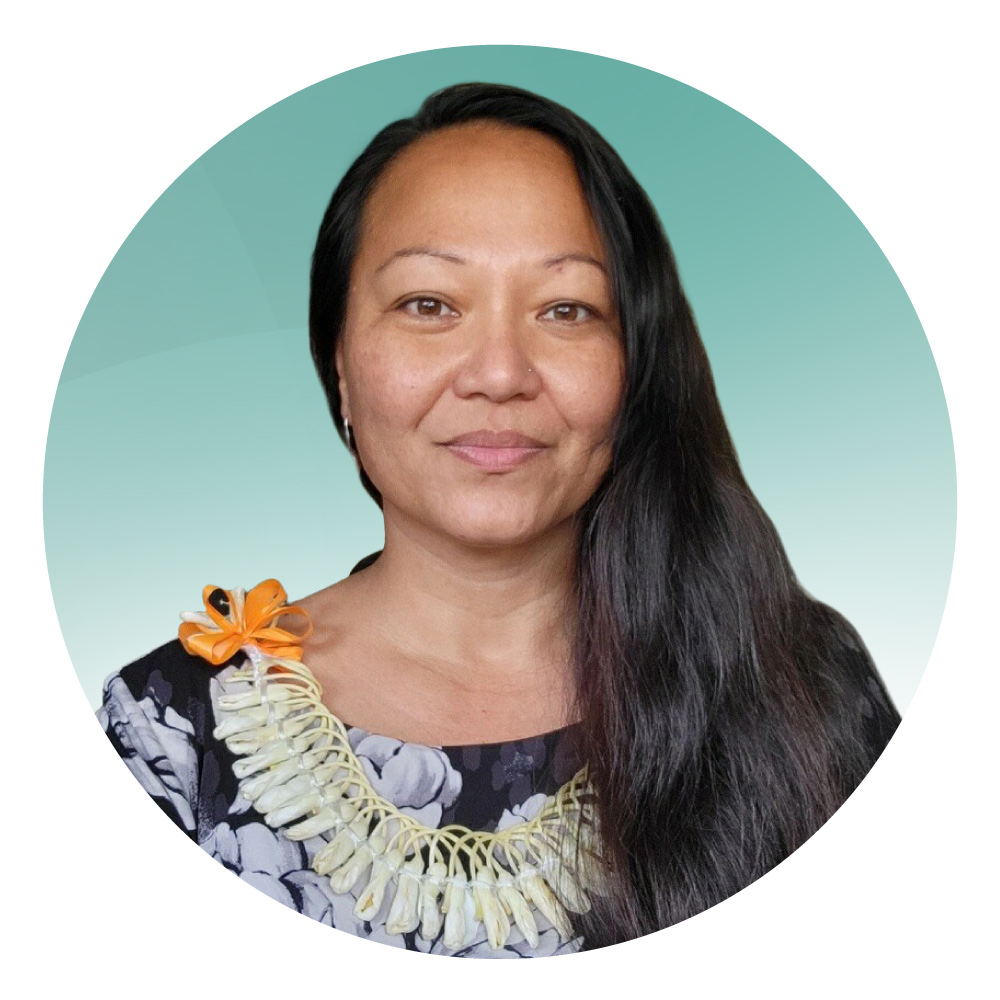
Yuuko Arikawa-Cross is the Director of the Executive Office on Early Learning (EOEL) and leads the coordination and development of Hawaiʻi’s early learning system.
In her first three years as Director, she worked with the early learning community to secure a $19.9 million federal Preschool Development Grant (PDGB5), supported the Ready Keiki Initiative with the expansion of Preschool Open Doors subsidies, partnered with the School Facilities Authority and HIDOE to open 80 newly renovated EOEL preschool classrooms that now include 3-year-olds and support Hawaiian Language, and secured $600,000 to support the Early Childhood Workforce.
Yuuko previously served as the Principal and Vice Principal of Daniel K. Inouye Elementary School.

Ready to Strengthen Your Early Childhood System?
Connect with our WestEd experts.
"*" indicates required fields
More Related to This Post
Blogs & Podcasts
Research insights and stories designed to inform, engage, and inspire.