

August 6, 2026
Key Takeaways
- Infant and early childhood mental health consultation supports child care providers and educators in managing children’s behavior and in understanding how providers’ own experiences shape the way they respond to the children in their care.
- Reflective practice spaces designed specifically for practitioners of color are a meaningful tool for preventing burnout and building a more culturally responsive early childhood workforce.
- Professional communities built around relationship-based care sustain the adults in this work by giving them the same sense of belonging and connection they are working to create for children.
Who Can Benefit? Early childhood program leaders, infant and toddler care educators, child care providers, and state and local leaders working to strengthen the early childhood workforce.
Young children’s social and emotional well-being is closely tied to the well-being of the adults who care for them. When caregivers feel supported, seen, and equipped to do their work, children benefit. But the early childhood workforce faces real and ongoing challenges, including staffing shortages, limited funding, insufficient cultural representation, and the emotional demands of caring for very young children. This Spotlight highlights three WestEd resources that explore investing in the adults at the center of this work.
When Providers Get Support, Children Excel
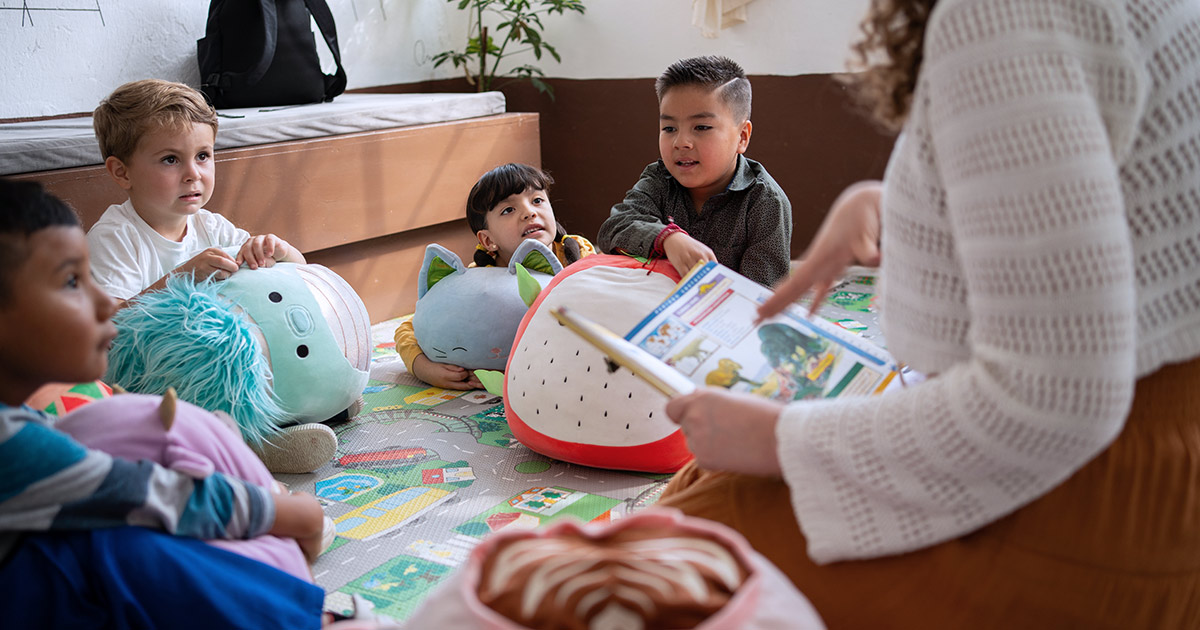
Child care staff and early education providers are often asked to respond to challenging behavior without the training or support to understand what is driving it. Infant and early childhood mental health consultation (IECMHC) offers a different approach: pairing providers with mental health consultants who help them reflect on children’s behavior, examine their own responses, and develop strategies that work for the children and families in their care.
WestEd’s Program Director Jennifer Miller explains how the California IECMHC Network, coordinated by WestEd and funded by the California Department of Social Services, puts this model into practice:
- Children’s relational health depends on caregivers’ well-being too. The relationship between consultant and provider directly shapes how providers engage with children and families.
- Research shows IECMHC improves how teachers interact with children, reduces behavioral challenges reported by staff, and builds provider confidence.
- The California IECMHC Network offers free services statewide in English and Spanish, in-person and virtually, and builds the capacity of IECMH consultants across California.
When providers have the space to reflect on their own practice, they are better equipped to support children, and that benefit is multiplied when those spaces recognize what they bring to the work.
Read The Impact of Infant and Early Childhood Mental Health Consultation in Early Education
Creating Welcoming Spaces for All Practitioners
Early childhood practitioners of color carry an additional weight in a field that has long lacked cultural representation and has not always created space for their voices and experiences. In this episode of the Leading Voices podcast, WestEd’s Monica Mathur-Kalluri, a project director on WestEd’s Early Childhood Intervention, Mental Health, and Inclusion team, speaks about the Revolutionary Reflective Practice retreat, a space designed specifically for practitioners of color to reflect, connect, and reclaim a sense of agency in their work.
The conversation surfaces what becomes possible when practitioners are truly seen and supported:
- Reflective practice spaces that create belonging are a practical strategy for avoiding burnout and keeping practitioners in the field.
- Practitioners from California and Virginia who attended the Revolutionary Reflective Practice retreat described gaining tools for their work and feeling empowered to act within their programs and communities.
- Inclusive professional learning spaces require deliberate attention to cultural representation, shared language, and the conditions that help people feel they belong.
Listen to Cultivating Belonging, Inclusive Spaces, and Reflective Practices
A Community That Sustains Work Across Generations
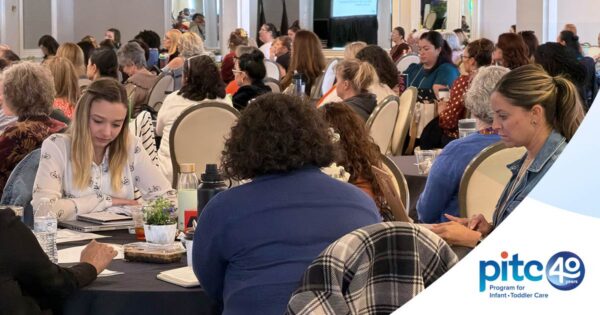
Reflective practice and mental health consultation build capacity in individual providers and programs. However, sustaining a workforce over time also requires something larger: a professional community in which knowledge is passed forward, relationships endure, and practitioners feel connected to a shared purpose. For 40 years, the Program for Infant/Toddler Care (PITC) at WestEd has cultivated that kind of community, and at its 2026 anniversary conference, practitioners from around the world came together to learn and reflect on what that community has meant to their work.
Voices from the PITC community point to what enduring professional support can look like:
- PITC builds communities where educators feel seen, supported, and connected to others who share their commitment.
- Attendees described PITC training as formative, giving them language for their work, connecting them to colleagues across settings, and building relationships that last well beyond the training itself.
- Cofounder Peter Mangione described PITC not as a fixed program but as one that grows with the people in it, where experienced educators pass knowledge forward and newer professionals find their footing.
When the adults who care for young children feel genuinely supported they are better able to offer children the secure, nurturing relationships that form the foundation of early learning and well-being.
Explore Honoring 40 Years and Shaping the Future of Infant and Toddler Care
Partner With WestEd to Strengthen Your Early Childhood Workforce
WestEd partners with early childhood program leaders, state agencies, and child care providers to build the systems, skills, and professional communities that support high-quality care for infants, toddlers, and young children.
Learn more about WestEd’s Infant/Toddler Care, Mental Health, and Well-Being focus area, read our recent early childhood focused E-Bulletin, and fill out our Work With Us form at the top of this page to connect with a WestEd expert.

Ready to Support Your Thriving Learners and Empowered Communities?
Connect with our WestEd experts.
"*" indicates required fields
More Related to This Post
Blogs & Podcasts
Research insights and stories designed to inform, engage, and inspire.





Events
Research insights and stories designed to inform, engage, and inspire.

Resources
Browse our high-quality publications and resources designed to inform and engage professionals in a variety of fields including K–12 education, early childhood, and health and justice.