


October 19, 2026
No matter how good something is, there are always ways to make it a little better for teachers. If you do that, it’ll be a richer experience all around.
— Coral Clark
Principal Investigator and Education Programs Manager, SETI Institute
In the darkness, flying 38,000 to 45,000 feet above Earth, teachers sat strapped into seats with five-point harnesses aboard a Boeing 747SP aircraft. Wearing headsets to hear over the roar of the cabin, they listened to pilots, instrument scientists, and mission managers as they took in the experience of a lifetime aboard NASA’s Stratospheric Observatory for Infrared Astronomy (SOFIA), the world’s only airborne observatory from 2014 to 2022.
Participating teachers from across the United States called Airborne Astronomy Ambassadors (AAA) spent a week immersed in the work of science. They met scientists, engineers, and technicians; toured instrument and hangar facilities; and spent one to two nights aboard the observatory as its telescope collected data from the infrared universe.
Funded by NASA and led by the SETI Institute, the AAA program gave middle and high school and community college educators immersive astronomy experiences, professional learning, and classroom resources designed to deepen science instruction. But its central idea was bigger than astronomy: Give teachers the opportunity to experience science as it actually happens, and then help them carry that experience back to their students.
“The AAA program’s purpose was to connect teachers and educators to real-world science,” said Coral Clark, current Principal Investigator and Education Programs Manager at the SETI Institute. “We provided educators the opportunity to work alongside science researchers, astrophysicists, and many others on the operations team.”
Clark was one of three education professionals on the SOFIA flight facilitation team, which also included Pamela Harman, Director of SETI Institute Education Programs and AAA Co-Investigator, and astrophysicist Dr. Dana Backman, infrared astronomer and former Principal Investigator for AAA.
“The field of astronomy evolved from the time when I was in graduate school, which was when we only had wood-burning telescopes,” Backman joked.
Earlier in Backman’s career, astronomers commonly traveled to telescopes and spent the night conducting their own observations. As technology advanced, researchers could increasingly propose observations from afar and have observatory staff collect the data for them.
SOFIA operated much the same way. The astronomers whose research was being conducted were not always onboard. Instead, teachers found themselves surrounded by the much larger team required to make the science happen.
That turned out to be an advantage.
Bringing Teachers Into the Work of Science
By flying above most of the water vapor in Earth’s atmosphere, SOFIA could detect infrared light that ground-based telescopes largely could not. That allowed astronomers to study celestial objects and regions obscured by clouds of gas and dust and to see parts of the universe that are difficult or impossible to observe in visible light.
But for the educators onboard, the science was only part of what made the experience immersive.
Clark said that during their first flight teachers often needed time simply to absorb what was happening around them. They listened as crews prepared the telescope for observations, learned to follow the flight plan, and watched the mission unfold. As the night went on, they moved around the aircraft, talking with telescope and instrument operators, mission managers, researchers, and pilots. By the second flight, they knew enough to ask deeper questions.
“The first time they flew, they were completely overwhelmed,” Clark said. “It was more than a fire hose. It was nothing like anything they’d ever done.”
The program’s designers eventually realized that the aircraft itself was only part of the experience. Teachers learned about the people and careers required to make a research mission possible. What began as an astronomy experience became an up-close look at science as a collaborative process.
“It’s real,” Clark said of immersive professional learning. She said a virtual presentation can introduce teachers to scientists, but it can’t replicate the spontaneous conversations that happen when they’re standing beside researchers and asking questions about the work in front of them.
Research suggests that when science teachers experience science as scientists do—working with experts, engaging in authentic research, and actively applying what they learn—the benefits can extend beyond the teachers themselves and into their classrooms.
Backman encountered similar research before the program began. He learned about programs that placed educators alongside scientists in settings ranging from laboratories to oceanographic research vessels.
“Having the teacher be part of a research group in some way, shape, or form energized the teaching, made the students more engaged, and made the teachers more engaged,” he said. “We knew we were on the right track.”
Turning an Extraordinary Experience Into Classroom Learning
The challenge was making sure a once-in-a-lifetime experience didn’t remain just that.
Beginning in 2017, the program included a 10-day curriculum module developed by SETI staff around the electromagnetic spectrum and multi-wavelength astronomy. Aligned with the Next Generation Science Standards, the module incorporated hands-on investigations, real examples from SOFIA research, and opportunities for teachers to share what they had personally experienced during in-person immersion experiences.
That bridge between experience and instruction became one of the program’s defining features.
“Infrared itself was not crucial—multi-wavelength astronomy and the idea that you need as many different windows as possible to get the comprehensive picture of what’s going on in the universe—that was what we were really trying to convey,” Backman said. “So, we called our curriculum Electromagnetic Spectrum and Multi-Wavelength Astronomy.”
“Teachers could connect it to a real-world experience they had, so they could talk authentically about the scientific process,” Clark said. “The curriculum wove in the topics and concepts they were already expected to teach in their classes in a way that excited them and their students.”
Backman said infrared astronomy offered an entry point into something broader: helping students understand how scientists ask questions, use different tools and wavelengths to investigate them, collaborate, collect evidence, and build understanding.
Without engaging science learning experiences, many students may lose interest in science and STEM careers. In 2024, just 28 percent of 8th graders reported a high level of interest and enjoyment in science, and only 14 percent said they frequently participated in classroom activities involving scientific inquiry. Only 30 percent of ACT-tested 2025 high school graduates met the ACT College Readiness Benchmark in science.
Using Evaluation to Strengthen the Program
As the program evolved, the SETI Institute engaged WestEd to serve as an independent evaluator to determine whether AAA was impacting teaching and learning and to understand how to improve the professional learning experience.
WestEd gathered feedback from educators across multiple program cycles, assessed the immersion experiences and curriculum, and worked with SETI to study student outcomes. When SETI introduced the classroom module, WestEd and SETI designed a randomized controlled trial of more than 2,300 students that compared students whose teachers used the AAA curriculum with students who received standard instruction.
Students who were taught with the AAA curriculum scored 5 percent to 7 percent higher on a post- assessment of the Electromagnetic Spectrum and Multi-Wavelength Astronomy than students in the comparison group—a statistically significant gain that exceeded the U.S. Department of Education’s What Works Clearinghouse benchmark for a meaningful impact on student learning.
“It was a genuine pleasure to work with every professional at WestEd,” Coral said. “If you want your program to succeed, you have to be open to hearing what is working and what could be done better.”
WestEd evaluators relayed that teachers wanted a second SOFIA flight so they could move beyond the sensory overload of the first and engage more deeply the next time aboard. WestEd also helped surface problems with an astronomy course that was too advanced for participants, prompting SETI to develop training that better matched teachers’ needs. Feedback also led the team to adjust student-facing science case studies for different reading levels.
Moving From Experience to Lasting Impact
WestEd’s final evaluation found that educators consistently described seeing real-world scientific research and interacting with scientists, engineers, and other professionals as among the most meaningful parts of the program. Teachers said those experiences gave them stories and examples that made science more relevant to students, broadened their knowledge of STEM and nontraditional career paths they could introduce to students, and strengthened their own motivation and confidence as educators.
Years after participating, 94 percent of surveyed teachers continued using the curriculum, and 99 percent continued talking about their AAA experiences with students. The curriculum is estimated to have reached more than 64,000 students, and 77 percent of teachers said the program had positive and significant impacts on their careers.
Clark also watched educators begin to see themselves differently. Some went on to present at national conferences, become STEM leaders in their districts, move into administration, or pursue other professional opportunities.
“They now had the confidence to speak at national conferences, to present at their schools, and to become leaders in their school district,” Clark said. “They had seen the work up close and could say, ‘I could actually share this information because I feel more confident about the process with my colleagues.’”
Carrying the Mission Forward
In 2022, SOFIA took its last flight, but the AAA program persisted.
Instead of ending the program, the AAA management team began asking which parts of the experience were essential and which were tied only to the aircraft. Teachers moved into ground-based immersion experiences, including at NASA’s Infrared Telescope Facility in Hawaiʻi and other astronomy research centers. In 2024, the program expanded its reach nationally through the Virtual Astronomy Academy, combining virtual professional learning with shorter in-person immersion experiences.
Across years and program models, WestEd found that educators continued to identify interaction with scientists and engineers and exposure to authentic scientific environments as among the most valuable parts of the experience.
The AAA program’s decade-long mission to enhance student STEM learning and engagement through professional development for science educators ended this year.
While SOFIA no longer soars through the darkness above Earth and AAA participants no longer bustle through astronomy research centers, the enthusiasm the program sparked in teachers still orbits their careers.
One Ambassador who took part in the Hawaiʻi immersion experience told WestEd evaluators that it continues to shape what they brought back to their students.
“It was an experience I will never forget and will always use this experience to teach my students,” they said. “It pretty much was something you only do once in your life. I think I could say life-changing for me and my students.”
Clark said that to develop authentic STEM experiences for teaching and learning, organizations must listen to teachers’ needs.
“As you’re working with teachers, hear their feedback when you can. Hear what they need, what they want, what other interests they have, and what other classes they teach,” she said. “No matter how good something is, there are always ways to make it a little better for teachers. If you do that, it’ll be a richer experience all around.”
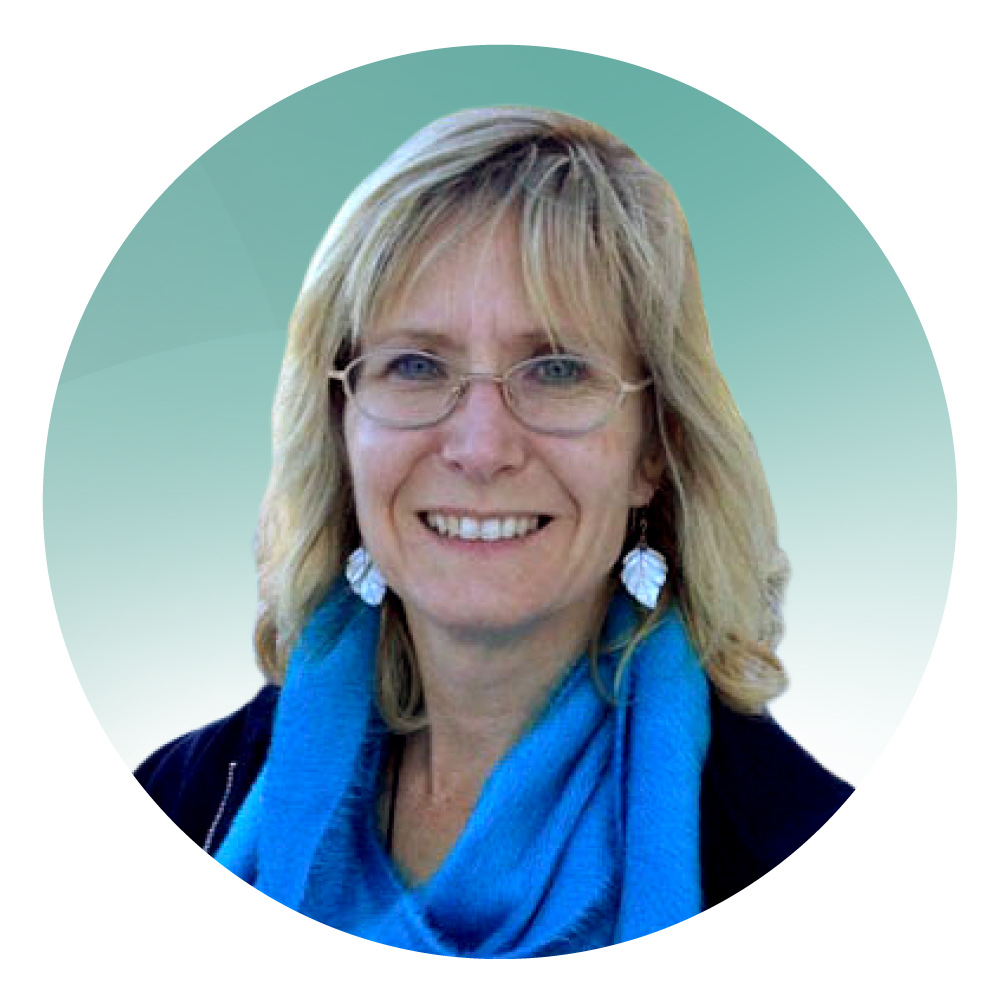
Coral Clark has over 30 years of experience in education, including classroom instruction and teacher professional development. Clark has managed education efforts for the SETI Institute and NASA, including the Airborne Astronomy Ambassadors and Education Associates Program (EAP) at NASA Ames Research Center. She has served as Science Teacher-in-Residence at the Exploratorium’s Teacher Institute and as Director of Education at the Resource Area for Teaching, a hands-on education support and innovation nonprofit.

Dr. Dana Backman was Principal Investigator of NASA’s Astronomy Activation Ambassadors program from 2016 to 2025. Trained as an astrophysicist, he taught physics and astronomy for 12 years at Franklin & Marshall College in Pennsylvania. Backman subsequently joined the SETI Institute as Director of Education and Public Outreach for NASA’s SOFIA airborne observatory from 2003 to 2016. He has taught courses on introductory astronomy at Santa Clara University, Foothill College, and Mission College, and is co-author of three college introductory astronomy textbooks.

Want to Understand and Strengthen Your Program's Impact?
Connect with our WestEd experts to learn more about our evaluation services.
"*" indicates required fields
More Related to This Post
Blogs & Podcasts
Research insights and stories designed to inform, engage, and inspire.


