

February 23, 2026
Education can and should be transformational, not transactional. Teaching and learning happen best when you can be your true self, when you’re safe, when you’re affirmed, when you’re healthy, and when you’re seen.
Los Angeles County is home to one of the nation’s largest community schools initiatives, with more than 500 schools transforming into hubs of community support. The Los Angeles County Office of Education (LACOE) plays a dual role in this work: (a) providing regional support to districts implementing community schools across the county and (b) supporting the model at 23 of its own school sites.
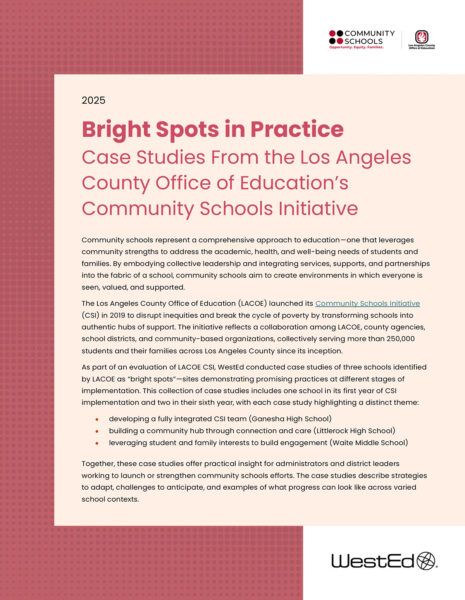
WestEd led an evaluation of the LACOE Community Schools Initiative (CSI), studying three “bright spot” community schools—visiting campuses, interviewing students and families, and documenting promising practices at different stages of implementation.
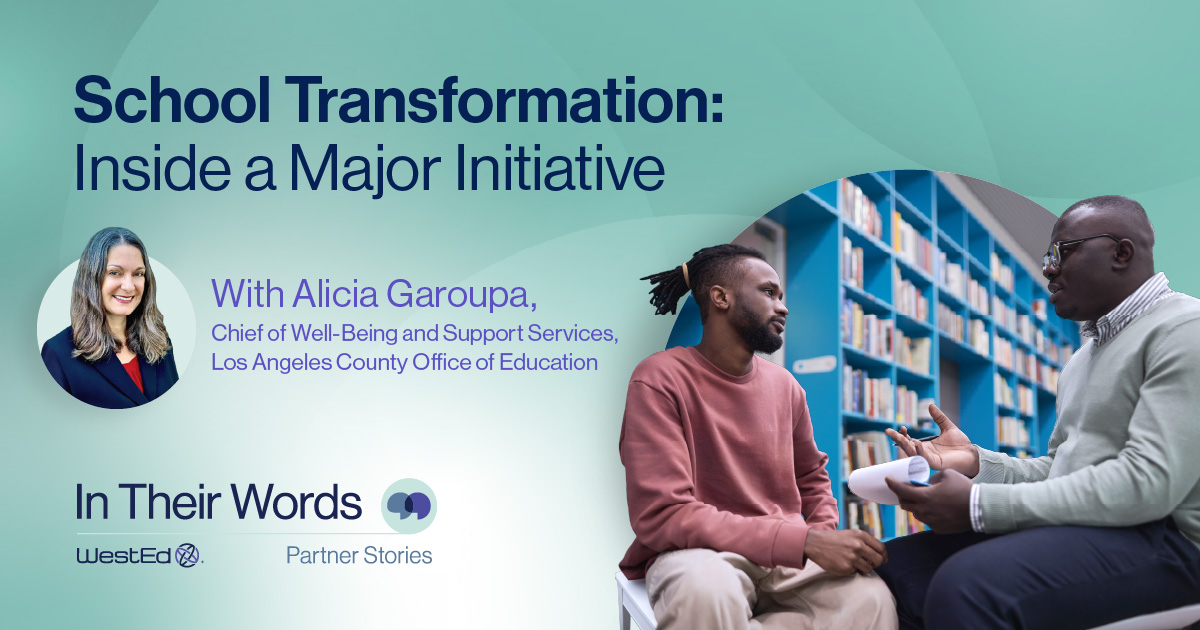
What does it look like when a school becomes a hub of its community? Alicia Garoupa, LACOE’s Chief of Well-Being and Support Services, is helping guide this transformation. She sat down with us to share, in her words, what makes these bright spots unique, the core principles that sustain the work, and the cultural changes needed to make it last.
LACOE’s CSI Bright Spots and Takeaways
Ganesha High School
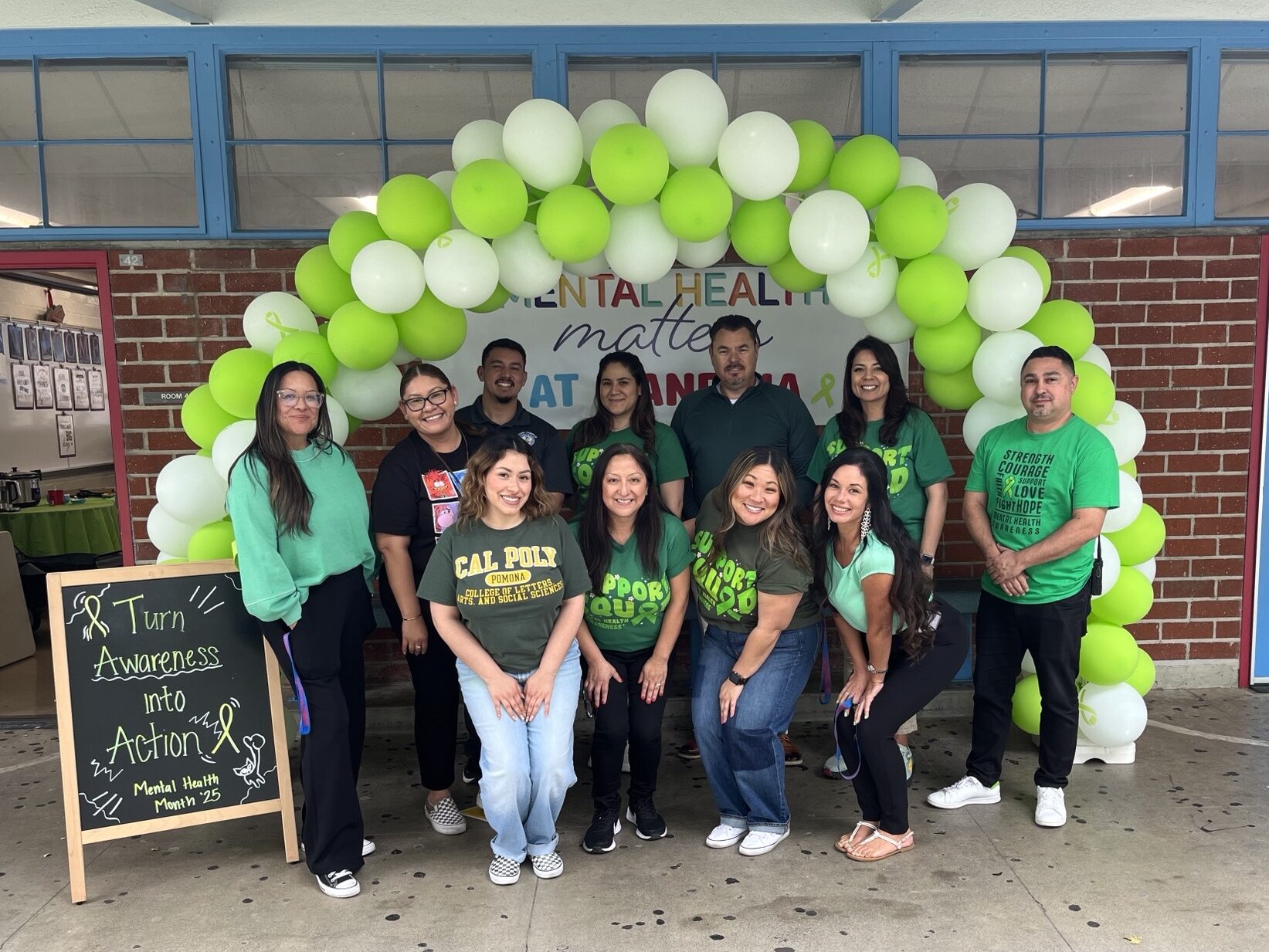
At Ganesha High School, the community schools model goes beyond coordinating services and improves how students and families access support through partnerships grounded in a shared vision: student support is a collective responsibility. The CSI team works closely with school counselors, administrators, and mental health staff to ensure students and their families are connected to the help they need.
The school also intentionally integrates district-provided resources, such as social workers and mental health interns; the CSI team introduces these professionals and services to students and families. Rather than presenting these supports as disconnected programs, the CSI team weaves them into the very fabric of the school’s culture—reinforcing the message that seeking help is normal, encouraged, and valued.

At Ganesha High School, I think a lot about the culture of collective responsibility for the well-being of kids. That comes through in different ways, but one of the ways that really stands out to me is proximity. There’s a focus on true integration and the presence of supports that are in service to kids and their families being highly visible at the school. That is fundamental to doing community schooling well, but I think they’ve figured out how to do that particularly well.
This approach only works when you have a culture that supports help-seeking. We can’t have support services there and then create or sustain stigma around accessing those services. The proximity—coupled with normalizing help-seeking and the messaging that a true community school is a hub and that there is no shame in seeking the support you need, and we are here to be responsive to those needs—is one of those fundamental shifts. That’s how community schools really become hubs of communities: by breaking down those stigmas. It’s the way we’re trying to humanize our schools in ways that they haven’t been humanized before.
Littlerock High School
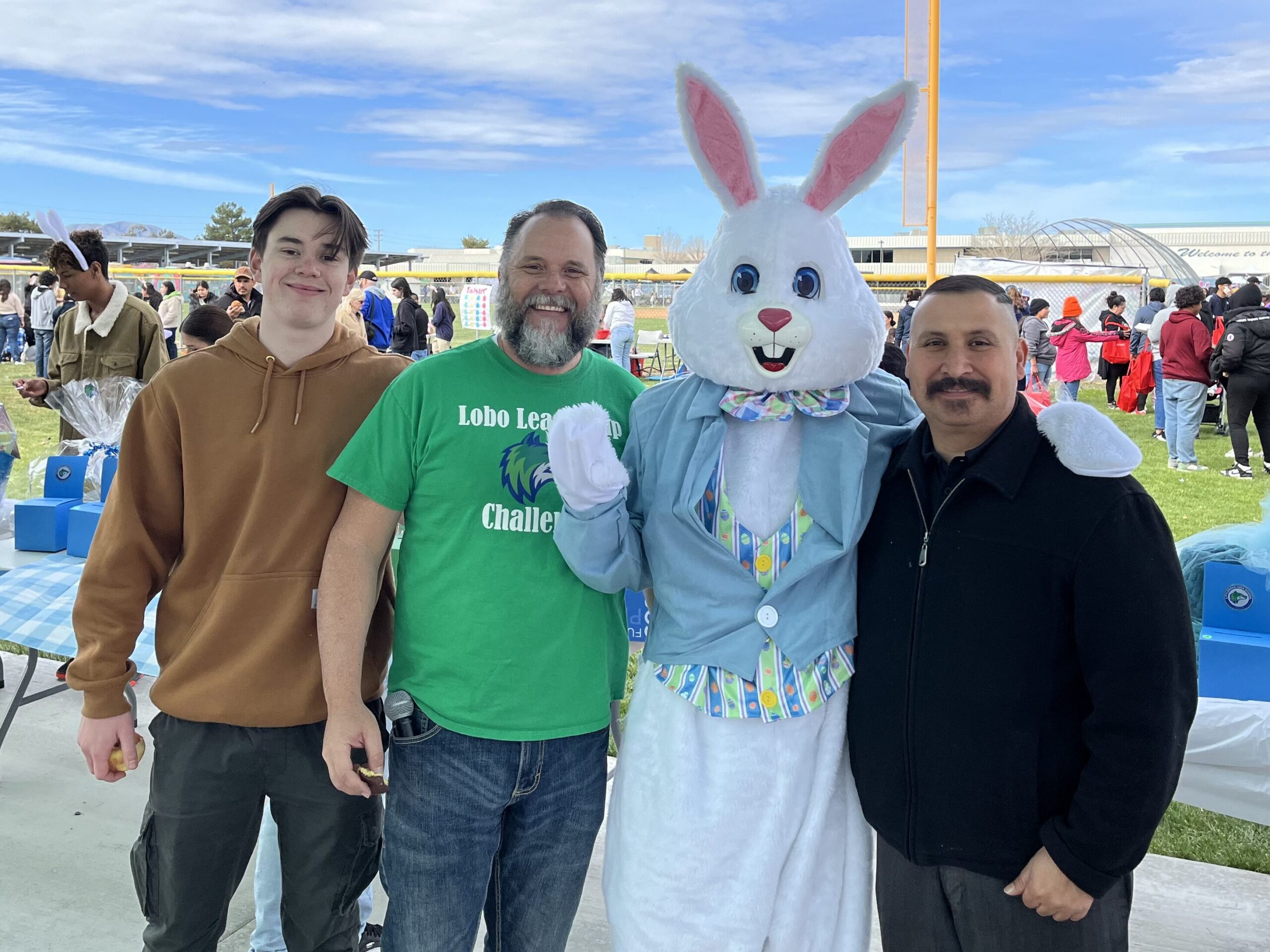
Littlerock High School sits at the heart of a geographically dispersed and underresourced region in northern Los Angeles County, where families often grapple with isolation, fewer job opportunities, and limited access to services. Since joining LACOE’s CSI, the school has become a trusted community hub that fosters a sense of belonging among students and throughout the community.
Littlerock’s CSI team organizes support based on community needs, including food distributions, a clothing closet, mental health counseling, and assistance with public benefits applications. They have improved community access to services through the school’s Family Resource Center and Wellness Center and by forming new partnerships with agencies to reduce barriers related to transportation, documentation, and stigma. Schools in similarly resource-strapped communities can look to Littlerock for how far relationship-centered engagement, strategic partnerships and service coordination, and community feedback loops can go in meeting needs creatively and consistently.
It’s baked into the California Community Schools framework. We have colleagues who say, “If you’ve seen one community school, you’ve seen one community school.” That’s by intention, by design. The idea is that you map assets and identify gaps with the community, consider which voices are not already being included in those conversations, be intentional about inviting and listening to those perspectives, and codesign approaches that are responsive to those perspectives. That is fundamental to community schooling—when we do this well, it’s not a siloed program. It’s how the school operates.
Littlerock has done an amazing job being responsive to locally identified needs and bringing in supports to address them. I remember visiting when they first opened—the community center, the washers and dryers, all the things they considered responsive to their community needs. It creates a situation where maybe you come in to access one support and learn about other resources available to you—sort of like a holistic, one-stop access point for what folks might need in a given community.
There is also the importance of being adaptable. As partners come in and out, you have to have a deep bench. We must really try to invite every child- and family-serving entity into our schools so that schools become places where all of our partners, who are charged in different ways with serving children and families, can make those services more accessible to the communities we all aim to serve.
Waite Middle School
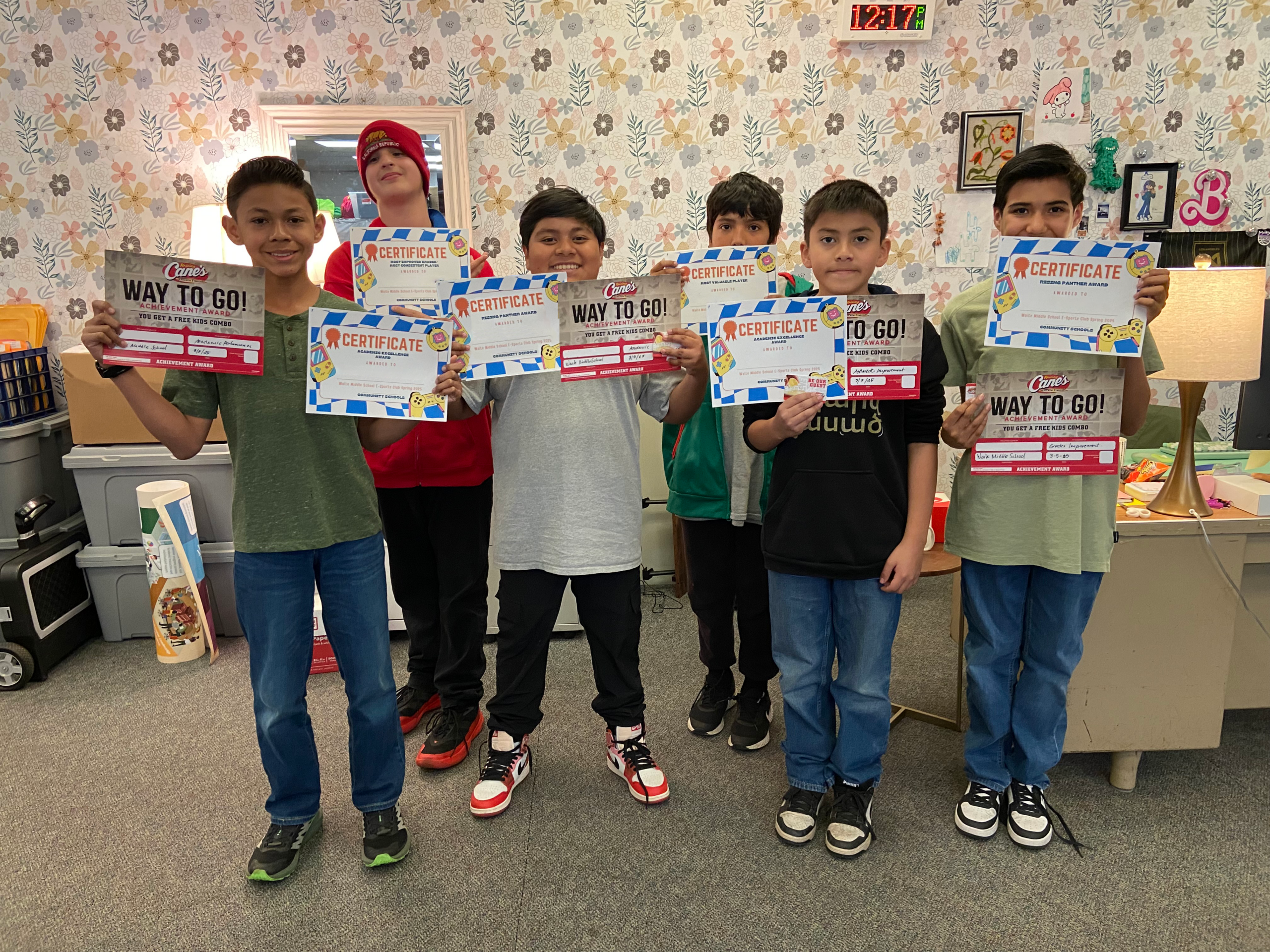
Serving a diverse student population in a densely populated, working-class community, Waite Middle School began full implementation of LACOE’s CSI in 2024. With a focus on trust building and engagement, the CSI team used surveys, informal conversations, and observation to ask students what they wanted from school.
Students’ feedback helped spark new campus programs, supervised and supported by CSI staff, that include an esports club and other student-designed spaces; these programs have motivated students who struggled with absenteeism and disengagement because they must maintain good grades and avoid recent disciplinary referrals to participate in the full club session. One teacher reported that the club “completely changed the game” for a student who had struggled with chronic absenteeism.
The CSI team also engaged parents to better understand their priorities and meet their needs. Parents consistently described feeling welcomed and respected by the CSI team, identifying the team as trusted and approachable contacts at the school.
Though still in the early stages, Waite’s approach illustrates how direct outreach and responsiveness to feedback can foster a culture that supports sustained engagement and well-being.
At Waite Middle School, they established esports, a Pokémon club, and other programs that were directly responsive to what students were saying and that can be transformative. It results in students saying, “Gosh, what I want matters. This is my school; this is for me, by me, about me.” Every kid deserves that.
But to get there, one of the fundamental questions we ask in community schooling is “whose voice is not yet at the table?” When we hear from students—especially those who are less connected or have been chronically absent—and we authentically listen through empathy interviews and other strategies, we can learn so much that can help us design better schools just by being responsive to what they’re saying. That takes work, but it’s about creating a bigger table so that there is more participation and intentionality in seeking out perspectives, voices, and information from people who feel least connected to our schools. We need to make sure that we’re doing that work and redesigning with those students in mind.
The beauty of community schools is that local design and the reflection of community assets and voice are in everything that we do. The school is not transactional—it’s not that you come through the doors and then you leave and go home. We are actually interdependent and connected. We have to see each other that way in order to really change what we’re doing in public education.
Lessons Learned and the Way Forward
It’s a reminder that this is school transformation—it’s not easy work. Systems take time to change, so continuous improvement must be our focus. We’re aiming for perfection, knowing it might take us a little while to get there.
And I think the recognition of how important trust is; trust is sort of an intangible that also needs to be tangible. Trust is something you feel and experience, and everybody needs to feel and experience it for this to be successful, and that is a fundamental shift in culture in many schools. How we make people feel is one of the most important pieces, so we must really center the experiences of people in our shared space and cultivate relationships, a true sense of belonging, shared ownership and shared power, and trust.
The idea is that it’s important to be responsive to feedback and purposeful in doing outreach by asking the question, “Whose voice are we not hearing?” If we don’t do that, then we’re not redesigning anything. Another important piece is adaptability. This is not “we’ve designed it and now it’s done.” It has to evolve because communities evolve and context evolves. We have to hold ourselves and one another accountable and give this process collective grace. We can’t throw it out and say this didn’t work because we’ve seen how well it can work.
When families, students, staff, and partners really take ownership of the school community and there is collective care, connection, shared decision-making, and agency, people don’t want to go backward. They see the power of that and want it to continue. And I think that’s where the magic happens.
To go back to this idea that we can’t go backward—there’s always the question of sustainability.
LACOE CSI is exploring many different approaches, but a key focus is how we make these practices so ingrained, so fundamental to how we do our work every day, in every facet, that we don’t go backward. Shared governance, distributed leadership, systems and structures, purposeful integration, a focus on in-school and out-of-school time, and authentic partnerships in service to children and their education—all of these reflect our shared commitment to cultivating conditions for powerful, culturally proficient, and relevant instruction and learning that truly nurture the brilliance in every child. Our goal is that we continue to do those things and continue to get better at them.
Our belief systems have shifted to see children, families, staff, culture, identity, and experience as assets. Each of us in the school community recognizes each other as whole people because everyone in our schools is better served that way. Education can and should be transformational, not transactional. Teaching and learning happen best when you can be your true self, when you’re safe, when you’re affirmed, when you’re healthy, and when you’re seen. Those are things that need to continue—broad ownership and buy-in from the school community and a collective commitment to that.
We need to be able to continue to build and find coalition partners. Some of this work requires funding, and that is one of the challenges. Too often, efforts fall on the backs of school administrators and others on our campuses. We have many people who are burning out under the weight, and when you invite a whole community to truly be part of a school, you share that weight and that ownership—both the work and the success. You also need structures to sustain those commitments and hold space for voices and collective responsibility for the education of our children. You need systems and structures to bring the community together, and that’s where the funding piece comes in. The collaboration with families and the community, as well as child- and family-serving partners and agencies, is essential for ensuring we can continue to adapt and sustain the pieces that are most in service to the community, are most in demand and needed, and have the most impact on improving outcomes for students. That requires intentionality—our collective commitment and intentional focus to build and sustain.
Work With WestEd to Strengthen School Communities
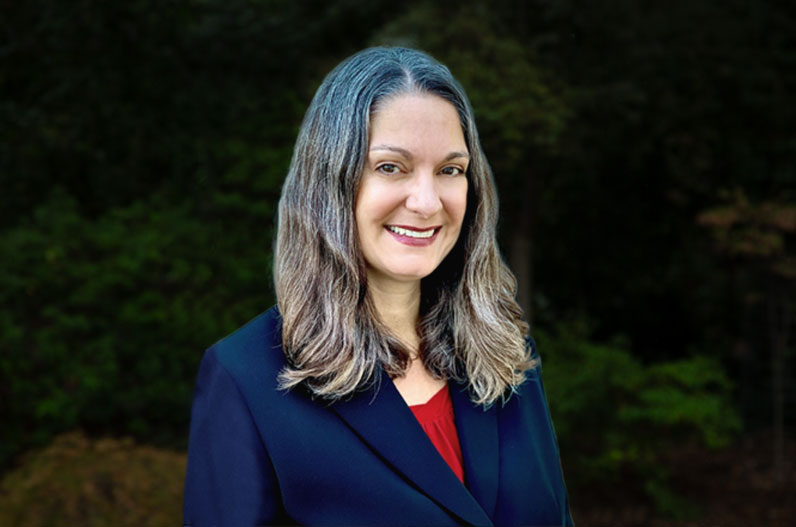
Alicia Garoupa (she/her) is Chief of Well-Being and Support Services for the Los Angeles County Office of Education (LACOE). A Licensed Clinical Social Worker with over 25 years of experience, she leads student-focused, data-informed, equity-driven system improvements grounded in the Multi-Tiered System of Support framework.
Garoupa leads and champions key initiatives, including the California Community Schools Partnership Program, Genuine Empathy & Nurturing Intellect of Underserved Students (GENIUS) Initiative, LA County’s Mandated Supporting Initiative, and the state’s Children and Youth Behavioral Health Initiative. Garoupa serves as tri-chair of the California Mandated Reporting Advisory Committee, working to transform child abuse reporting systems and eliminate racial disparities. She is passionate about creating educational systems that honor the strengths, identities, and aspirations of every student and family.

Work With Us
Connect with a WestEd expert.
"*" indicates required fields
More Related to This Post
Resources
Browse our high-quality publications and resources designed to inform and engage professionals in a variety of fields including K–12 education, early childhood, and health and justice.