


According to the National Student Clearinghouse Research Center, a bachelor’s degree is an important pathway for economic mobility. Unfortunately, fewer than a third of community college students transfer to a 4-year institution within 6 years of initial enrollment.
Purpose
The Puente Project, implemented for over 40 years in California community colleges, aims to increase transfer and graduation rates for educationally underserved students through academic instruction, mentoring, and counseling.
The program is currently active in 67 colleges and is set to expand into all of California’s 115 community colleges, with funding from the California Community College Chancellor’s Office (CCCCO). This Randomized Control Trial (RCT) led by WestEd will be the first study to rigorously assess Puente’s impact on both short- and long-term student outcomes.
Audiences Served
Policymakers are actively seeking proven, scalable strategies to close persistent gaps in college access and completion for historically underserved students. Study findings will inform state- and campus-level decisions related to resource allocation, program design, and the strategic scaling of evidence-based supports that meaningfully address educational inequities.
Project Activities
WestEd is conducting a two-cohort, multisite, student-level RCT with California community colleges where demand for Puente enrollment exceeds program capacity. Students will be randomly assigned to either a Puente or a non-Puente group. Over a 10-year study period, the research will examine short-term outcomes predictive of degree attainment (credit accumulation, GPA, college-level English and math course completion, and retention), as well as long-term outcomes (completion of 60 transfer-eligible units, certificate or degree completion, transfer to a 4-year university, and 4-year degree attainment).
Our Partners
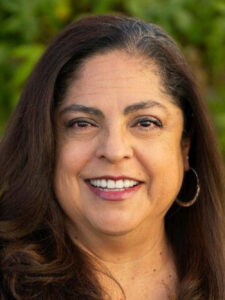
Cathy Martinez
With over 35 years of experience in higher education, Martinez has dedicated her career to advancing educational equity for underrepresented students. Since joining the Puente Project in 2001, she has served in several key leadership roles, supporting professional development, strategic partnerships, and the optimization of organizational and data systems.

Rick Luna
For 25 years, Luna has served as the Institutional Data Analyst for the Puente Project. He is widely recognized across the University of California’s Student Academic Preparation and Educational Partnerships (SAPEP) programs for his commitment to data integrity and stewardship and his demonstration of the importance of using research to showcase educational models of success.
Project Directors
Noman Khanani
Laura G. Lara-Brady
Katie D’Silva
Funder
The project is funded by Arnold Ventures.
Project Duration
12/5/2025 – 4/30/2034