

July 27, 2026
Responsive, relationship-based care is built on the understanding that infants and toddlers thrive through secure, respectful relationships. The same principle applies to the adults who care for them. Infant and toddler care teachers benefit from communities in which they feel seen, supported, and connected to colleagues who share their commitment to young children.
Cofounded 40 years ago by J. Ronald Lally and Peter Mangione, the Program for Infant/Toddler Care (PITC) at WestEd, in partnership with the California Department of Social Services, helps to cultivate that kind of professional community. Through training grounded in research and practice, PITC has brought together generations of infant and toddler educators, program leaders, trainers, and other early childhood professionals to learn from one another and strengthen their practice.
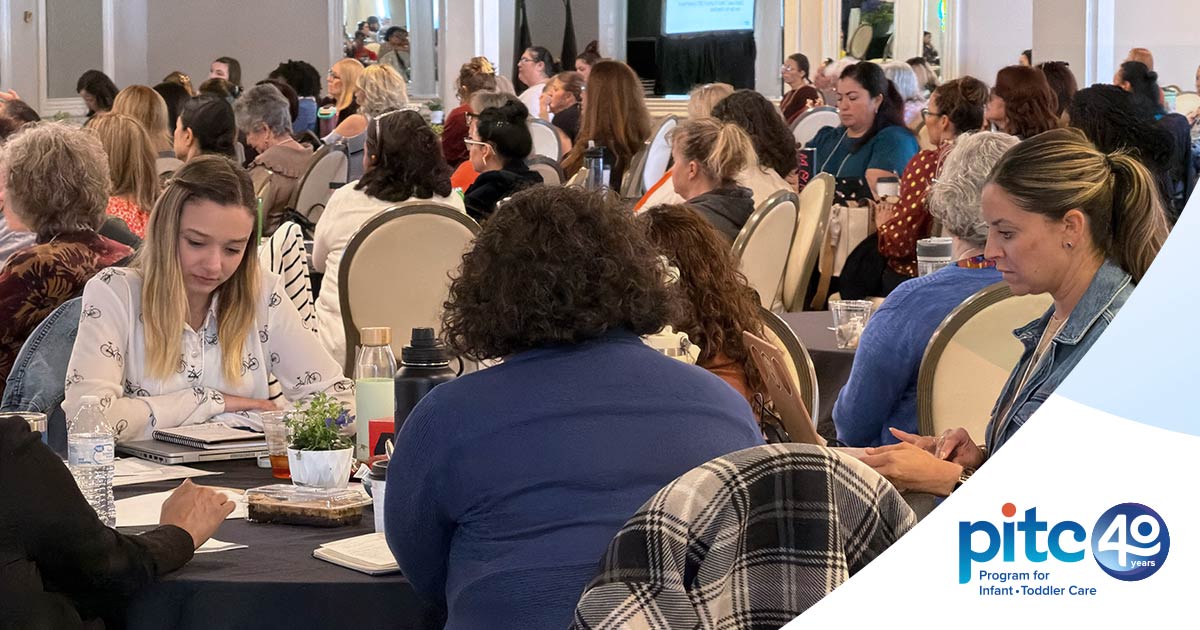
At PITC’s 40th anniversary conference in 2026, professionals from around the world came together to learn, reflect, and connect. Their reflections revealed a common theme: PITC has connected research to everyday infant and toddler caregiving practices and cultivates a sense of belonging that supports and sustains the community’s work.
Voices From the PITC Community
In these reflections, conference attendees describe how PITC training has shaped their work with infants, toddlers, and their families and created a sense of professional belonging.
Martina Marquez-Ramirez, Learning That Becomes Personal
Martina Marquez-Ramirez is a child development instructor at a local college. She attended her first PITC training when she was 8 months pregnant with her first child. In this video, she recalls how she experienced care during the training and how that experience influenced her life and work.
Connie Espinoza, Viewing the World Through a New Lens
Connie Espinoza uses the PITC framework in her work as a community of practice coordinator and professional development facilitator. She reflects on how PITC shaped her perspective and why she wants more people to have access to infant/toddler care training.
Jennifer Anthony, Bringing the Learning Home
Jennifer Anthony is an education specialist coach who works with children, program staff, and parents. She discusses what she learned at the conference and what keeps her in the field.
Wendy Ruiz, Finding Belonging in a Community of Practice
Community college instructor Wendy Ruiz describes her first training session and the sense of professional community that continues to inspire her work.
Laura Cecilia Jimenez, Supporting the Next Generation of Educators
Infant and toddler specialist Cece Jimenez emphasizes the importance of teaching and mentoring as ways of ensuring that future early childhood practitioners receive the knowledge they need to provide relationship-based care.
Amber Jones, Building Relationships That Endure
Amber Jones reflects on the lasting relationships she has developed through PITC and how professionals across settings and communities can learn from one another and contribute to meaningful change.
A Professional Community That Continues to Grow
Reflecting on PITC’s history, cofounder Peter Mangione described it not as a fixed program but as one that grows with the people who shape it.
The conference brought that idea to life. Experienced educators passed their knowledge forward, newer professionals found language for what they observe and value, and colleagues strengthened relationships that can support their learning long after the event.
Professional Development Opportunities and Resources
Across 4 decades, PITC has cultivated a community committed to viewing infants and toddlers not as passive recipients of care but as curious, motivated learners. Through shared learning and relationships, that community also supports the adults who care for them.
Explore PITC’s professional development opportunities, including training, coaching, and certification, to deepen your knowledge and support high-quality care for infants and toddlers.
Professional Development
We tailor options to the needs of individuals, programs, or groups by delivering an actionable study of our philosophy and practices, enhancing your ability to provide high-quality infant and toddler care. View professional development opportunities.
Regional Support Network
The Program for Infant/Toddler Care (PITC) Regional Support Network (RSN) provides statewide, onsite professional development tailored for infant toddler educators and administrators working in family child care home- and center-based programs. Learn more about RSN.
Curriculum
The PITC Curriculum promotes relationship-based and individualized care, cultural and linguistic responsiveness, and meaningful partnerships with families. The PITC curriculum offers the guidance necessary to support learning and development. The curriculum resources are available in both English and Spanish. Explore the curriculum.
Program Quality
The PITC Program Assessment & Reflection System (PITC PARS) is a resource for observing, documenting, and reflecting on infant/toddler group care—from caregiving interactions to the physical environment to policies and administrative structures. The program is available in English, Spanish, and traditional and simplified Chinese. Learn more about the PITC PARS.
Work with Us
Connect with a WestEd expert.
"*" indicates required fields
More Related to This Post
Blogs & Podcasts
Research insights and stories designed to inform, engage, and inspire.





Events
Research insights and stories designed to inform, engage, and inspire.

Resources
Browse our high-quality publications and resources designed to inform and engage professionals in a variety of fields including K–12 education, early childhood, and health and justice.