

Product Information
Copyright: 2026
Format: PDF
Pages: 8
Publisher: WestEd
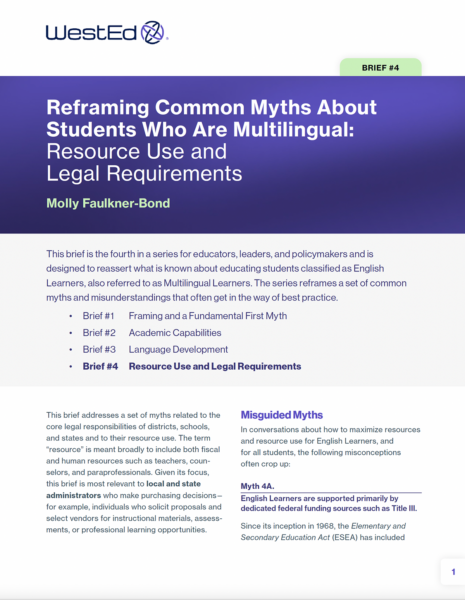
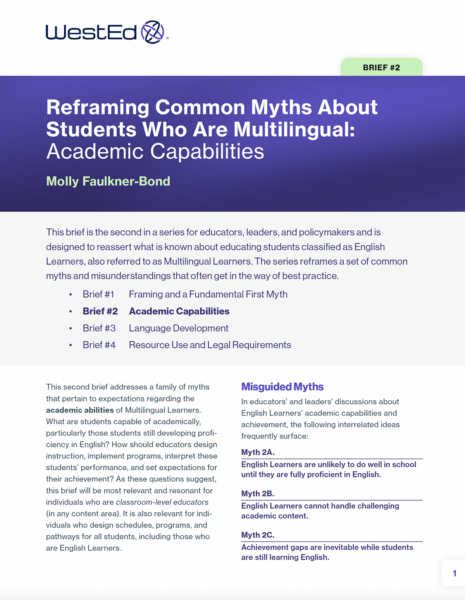
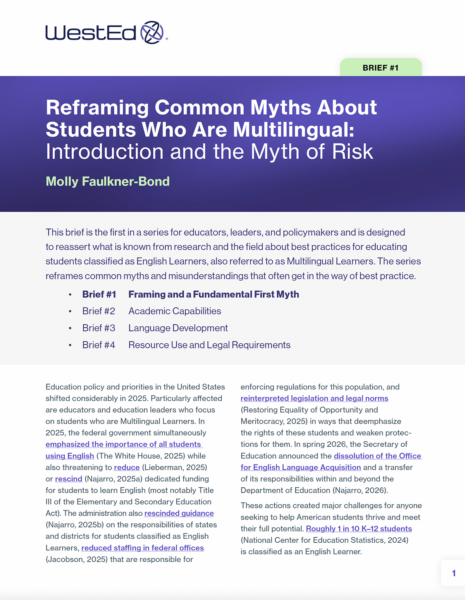
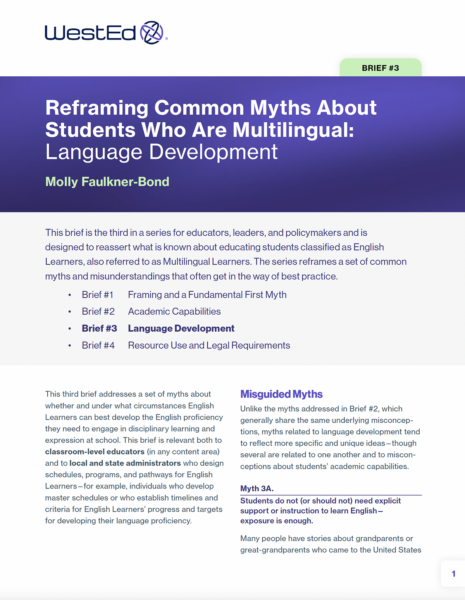
Widespread misconceptions about how English Learners develop language proficiency can lead to well-intentioned but counterproductive decisions in schools and districts. This third brief tackles five common myths, including the beliefs that immersion alone is sufficient, that students can reach proficiency in a year or two, and that supporting students’ home languages hinders their English development. Research directly contradicts each of these assumptions: English Learners need explicit, sustained instructional support; language development typically takes well over a year; and students in bilingual programs do as well or better academically in the long run.
The brief also challenges the tendency to treat language development as a siloed endeavor handled in dedicated classes rather than woven throughout all academic disciplines. When schools fill students’ schedules with additional English Language Development courses at the expense of core academic subjects, students miss critical learning opportunities that can follow them for years. The brief urges educators and administrators to plan for language development as something that happens across all disciplines, giving students consistent access to rigorous content alongside the language support they need.
This is the third brief in the Reframing Common Myths About Students Who Are Multilingual series. Read the fourth brief in this series here.
Author
Molly Faulkner-Bond
More Related to This Resource
Resources
Browse our high-quality publications and resources designed to inform and engage professionals in a variety of fields including K–12 education, early childhood, and health and justice.