


August 17, 2026
Key Takeaways
- A strong K–5 literacy culture goes beyond phonics instruction and is shaped by school leaders.
- Through Reading Apprenticeship, educators across disciplines use a shared language for reading and thinking, giving students greater consistency across courses.
- Sustained literacy improvement requires a commitment that teachers and leaders enter together.
Who Can Benefit? Elementary and secondary school leaders, district administrators, literacy coaches, and higher education faculty.
Literacy improvement efforts often gain traction program by program and classroom by classroom, but individual efforts don’t always add up to a coherent system. Without a shared language for what reading and thinking looks like, students can move from grade to grade and course to course without consistent support. This Spotlight highlights three WestEd resources that explore what it takes to build literacy systems in practice.
What Does a Strong Literacy Culture Feels Like?
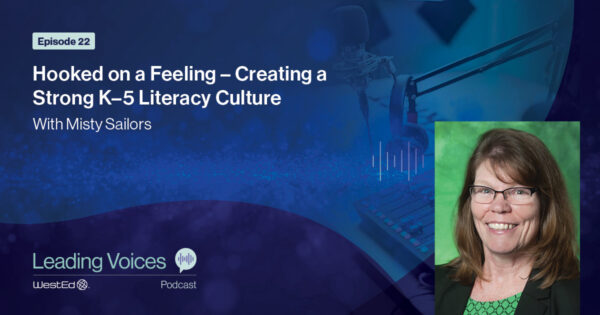
Building a K–5 literacy culture means creating an environment in which students and teachers feel the school’s commitment to reading and writing the moment they walk in. In this Leading Voices podcast episode, literacy expert Misty Sailors talks about how school leaders can build that type of culture, from the student work displayed on the walls to the way leaders talk about reading.
Sailors offers practical guidance for elementary school leaders:
- Phonics instruction is foundational, but reading also involves making meaning with and from texts. A strong literacy culture holds both—building foundational skills while helping students experience reading as meaningful and useful.
- When teachers have room to make professional decisions about instruction, they are more invested in the work and better positioned to meet the needs of students.
- Comprehension and disciplinary literacy give students reasons to read beyond decoding, and authentic texts can deepen engagement by connecting students to real questions and real content.
Listen to Hooked on a Feeling—Creating a Strong K–5 Literacy Culture
A Literacy Framework That Travels Across Disciplines
When students reach higher education, reading demands shift and disciplinary texts become more complex. At Fitchburg State University, Professor Laura Garofoli recognized an opportunity: By giving students metacognitive strategies and motivation to engage with college-level texts, she could help them develop a stronger sense of themselves as capable readers and learners.
Garofoli’s solution was Reading Apprenticeship, a framework developed by WestEd that helps educators make expert reading visible across disciplines:
- A shared framework can accommodate disciplinary differences. Reading Apprenticeship gave Fitchburg State faculty a common language without requiring them to follow the same texts or lesson sequences, which mattered across a university with many disciplines and a culture of academic freedom.
- Professional learning benefits from ongoing support. Garofoli paired summer training with yearlong meetings for faculty teaching the First-Year Experience course, building a community of practice that extended well beyond a single workshop.
- Student engagement grows with the right strategies. When students used metacognitive logs, annotation routines, and prereading approaches like “dipping and digging,” they became more willing to engage with difficult texts and more likely to move deeper into the content.
A framework that travels with students across courses and disciplines means they don’t have to start over every time they enter a new classroom.
Read A Shared Language for Reading Takes Root at a Massachusetts University
What It Takes to Sustain Literacy Work at the District Level
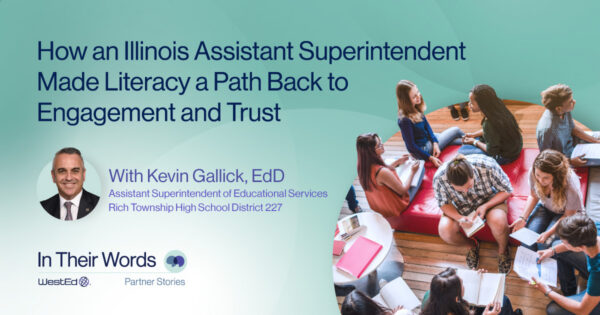
A shared framework is only as strong as the system built to support it. At Rich Township High School District 227 in Illinois, Assistant Superintendent Kevin Gallick had seen the challenges created by short-lived initiatives, including diminished trust and inconsistent experiences for students.” His response was a deliberate, 3-year improvement plan built around Reading Apprenticeship and a sustained partnership with WestEd.
His experience points to what makes districtwide literacy work hold together over time:
- Long-term planning protects the work. Gallick launched a 3-year plan approved by the district’s Board of Education, making the commitment visible and public so that teachers and administrators had a reason to invest.
- Shared professional learning reinforces collective ownership. Teachers and administrators participated in Reading Apprenticeship professional learning together, with coaching incorporated from the beginning.
- Sustained effort produces visible results. After only 3 years, Gallick described the district as having reached stability: a consistent level of engagement and production at every grade level.
Read How an Illinois Assistant Superintendent Made Literacy a Path Back to Engagement and Trust
Partner With WestEd to Strengthen Literacy Across Your System
Building a coherent literacy system takes time, shared commitment, and the right support. WestEd’s Language, Literacy, and Learning team works with schools, districts, and higher education institutions at every stage of that process.
Learn more about WestEd’s Language, Literacy, and Learning work, and fill out our Work With Us form at the top of this page to connect with a WestEd expert.

Ready to Support Your Thriving Learners and Empowered Communities?
Connect with our WestEd experts.
"*" indicates required fields
More Related to This Post
Blogs & Podcasts
Research insights and stories designed to inform, engage, and inspire.



Resources
Browse our high-quality publications and resources designed to inform and engage professionals in a variety of fields including K–12 education, early childhood, and health and justice.