

June 17, 2026
When Assistant Superintendent Dr. Kevin Gallick of Rich Township High School (RTHS) District 227 walked into classrooms during his first year on the job to assess the state of learning, he saw students seated in rows, often behind computers. They were mostly silent, and they rarely interacted with one another. There was almost no text visible on the walls or desks. The conditions reflected more than classroom routines. They also pointed to a system in which teachers had been through years of disruption, making trust, collaboration, and shared instructional practice harder to sustain.
“You didn’t see kids interacting with each other, you didn’t see cooperative learning set up at all in the classroom—it was not an exciting state of learning,” Gallick said.
For students entering high school with lower proficiency in core academic subjects, the lack of interaction and collaborative learning made it harder for them to engage in class and strengthen their academic skills.
Gallick saw literacy as a way to deepen student learning while giving teachers and leaders a common instructional focus. With WestEd as a key partner, that observation grew into a deliberate, multiyear effort to strengthen teaching and learning across the district.
Becoming a Literacy Leader
Gallick’s commitment to literacy began decades earlier when he was a social studies teacher at a high school that served a student population with diverse needs. Reading and writing were central to his instruction, but his understanding of what meaningful literacy work required deepened over time.
Early in his teaching career, while he was teaching AP U.S. History, a student told him near the end of the year that none of the students had actually been reading the textbook he assigned.
“My feelings were really hurt because I thought they were,” Gallick said. “But then I realized I really had to reorganize the whole class to make it better.”
After that, he changed the structure of the class. Fridays became discussion days, with students reading argumentative history essays, marking them up, and talking through the ideas together. In other classes, including those with students who struggled more with reading, he made time during class for students to sit with challenging texts and work through them together.
“I recognized that deep reading, marking up text, and discussion of text is really fundamental to the joy of learning, but also accountability for learning,” he said. “Creating a space for reading in the class, I learned early on, is a really good use of time. And it’s fundamental to the joy of learning and for students to take on an identity as a learner.”
When Gallick became a principal, he brought that same focus on literacy with him. As a principal, one of his first opportunities to influence instruction came through a schoolwide literacy initiative centered on writing, assessment, targeted tasks, and professional learning.
It was also during that period that Gallick first connected with WestEd and participated in Reading Apprenticeship Essentials I. He saw the promise of the framework, but he also noticed that leaders and teachers could have strong learning experiences with Reading Apprenticeship without always knowing how to organize and sustain the work across a school.
Reading Apprenticeship® is a teaching framework and professional learning approach developed by WestEd that supports educators in coaching students to become stronger, more confident readers. It helps students navigate complex texts, develop discipline-specific ways of thinking, and strengthen their critical thinking skills.
That experience proved essential when Gallick arrived at RTHS as Assistant Superintendent.
He said the district was struggling to identify a clear instructional focus after years of change and competing initiatives. Leaders needed an approach that could deepen teachers’ professional learning and shift classroom dynamics.
Moving From Disruption to Direction
RTHS serves 2,198 students across two campuses. In the years leading up to their partnership with WestEd, the district had experienced leadership shifts, a school closure, pandemic disruption, and a faculty that experienced being shuffled across buildings and required to participate in short-lived initiatives.
“Teachers had experienced a lot of things that never went beyond a year,” Gallick said. “There was a real lack of trust, and it wasn’t clear that administrators knew how to influence what was happening in the classroom.”
The student data reflected that instability. Growth was uneven across grade levels, suggesting that students were having inconsistent learning experiences depending on where they were in the district.
Gallick said the district needed more than another program. It needed a sustained instructional focus and a way to build trust as the work moved forward.
Rather than launch another short-term initiative, Gallick launched a 3-year districtwide improvement plan that was visible and approved by the district’s Board of Education.
He said the multiyear plan helped protect the work by making the district’s commitment clear and public. Because the board had approved the effort and the superintendent had authorized the plan, leaders could show teachers and administrators that the initiative had real backing and was not another one-and-done effort.
The design was intentional in other ways, too. Administrators and teachers entered Reading Apprenticeship professional learning together, on a horizontal line, not in a top-down structure where leadership handed down directives. The first cohort brought together all 9th grade teachers and all social studies teachers—a pairing that helped build a community of practice and mapped naturally onto the district’s existing academy model, which already organized staff around a freshman academy with its own leadership structure.
The district also invested in coaching. Through planning, implementation, and improvement cycles, Reading Apprenticeship coaches, who are current and former teachers, integrated Reading Apprenticeship practices into existing instruction and curricula, adapting the model to fit RTHS’s needs while maintaining its core principles.
“I knew that many high school principals in Chicago struggled to implement,” Gallick said. “They paid for professional learning for their teachers, but not coaching. The decision to do the coaching was so huge because it gave us an impartial partner, a research-based partner who could work with our teachers.”
Strengthening Instruction Across Classrooms
Now, 3 years into the work, the shifts are visible.
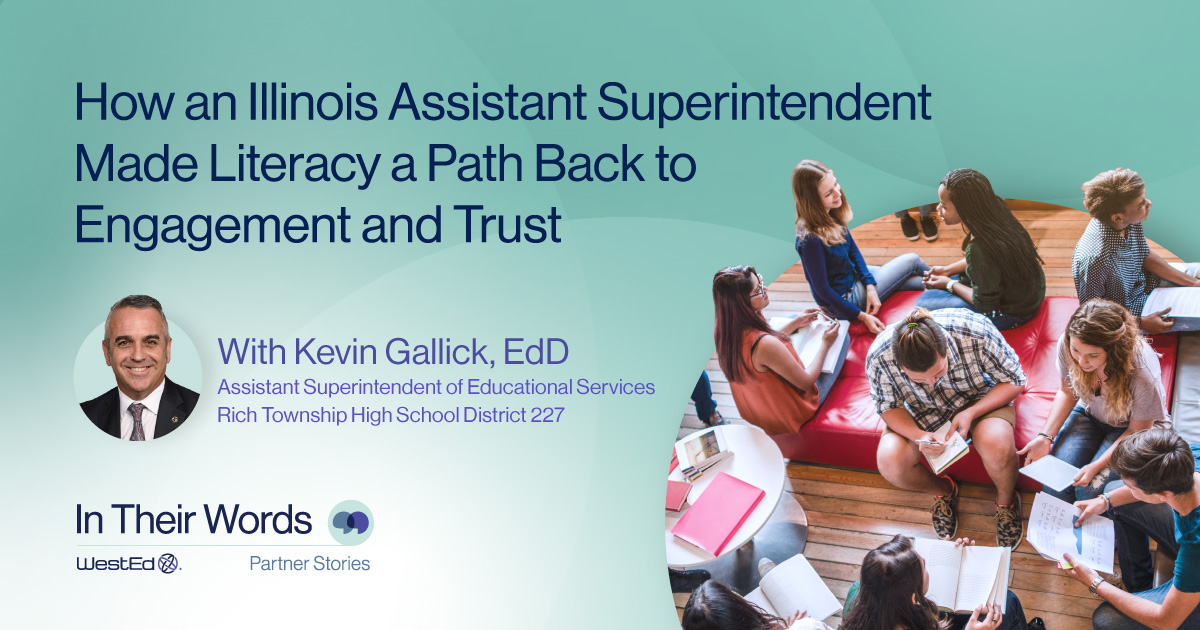
Walk into almost any classroom at RTHS, and the furniture alone tells a different story. The desks are arranged in collaborative groups, not rows. Text is everywhere, and students are talking with each other about what they’ve read.
Gallick said faculty now understand the expectation: Students should be reading and discussing texts with one another. When leaders visit classrooms and don’t see that happening, they recognize it as an area for growth. The Reading Apprenticeship framework, he said, helped the district define what effective instruction should look like in practice.
The writing assessments also reveal real progress. Students who once produced a few sentences are now writing paragraphs. Test scores in ELA and reading have improved. And the unevenness in student outcomes across grade levels has steadied.
“What I see now is stability,” Gallick said. “We’re getting a certain level of production at every single grade level. It might not be transformational yet. But we’re in a much more sustainable and productive learning environment.”
Building a Relational Foundation
Gallick said relationships and the deliberate cultivation of trust at every level of the work hold their initiative together.
“You’re never going to be in a teacher’s class all the time,” he said. “So, you really need to invite their participation, support them to try new things, and help them have a good experience.”
During the initial professional learning, WestEd facilitators built positive relationships with teachers, while administrators participated alongside them as learners. That mattered, Gallick said, because after the first 3 days, teachers felt more open to the work than many of them had expected.
From there, each WestEd visit was designed to keep building trust. Sessions included professional learning, coaching, and classroom learning walks, during which leaders visited classrooms to see how students were engaging with the content.
Even small gestures helped. After visiting classrooms, coaches and leaders often left notes recognizing something a teacher had tried.
“Teachers need that encouragement,” Gallick said.
Many teachers were not new to the profession, so the work often required them to change long-standing habits, return to practices they had moved away from, or adapt to students whose needs had changed over time. That made trust essential. Teachers needed room to try something new without feeling judged before the practice had time to develop.
The partnership also helped administrators think differently about their role in instructional change. WestEd coaches modeled how to look for growth, notice early attempts, and approach classroom visits with a growth mindset toward teachers.
“Having an external partner and a sustained relationship has helped our administrators and our teachers,” Gallick said.
He said that over time, WestEd’s sustained presence helped the work move beyond isolated training sessions. It became a deeper partnership—one that supported teachers as they changed practice and helped leaders build the trust and shared language needed to sustain that change.
Staying the Course
Sustaining multiyear improvement work is challenging, but RTHS has maintained momentum through continued commitment from both teachers and administrators. After 3 years, the district is preparing to continue the work and deepen coaching for some teachers.
“It’s clear that it’s a priority,” Gallick said. “We established literacy and numeracy and graduation rates as a priority, and we’re not diverting from that.”
For other district leaders considering a similar path, his advice is rooted in what he has learned from experience: Stay the course, invest in relationships, and choose a framework that people can believe in.
He said one of the strengths of Reading Apprenticeship is that it gives educators a shared language for instruction without becoming overly rigid or tightly managed. At its core, the framework reflects a simple yet powerful belief that students should engage deeply with texts and one another.
For Gallick, this work is ultimately about creating classrooms in which students are active participants in their own learning. That means giving them consistent opportunities to read, discuss ideas, step away from devices, and see themselves as readers and thinkers.
“The best part about the Reading Apprenticeship framework is recognizing that there’s a social dimension to learning,” Gallick said. “And if kids are going to leave their homes and go to school every day, they need to benefit from being together.”
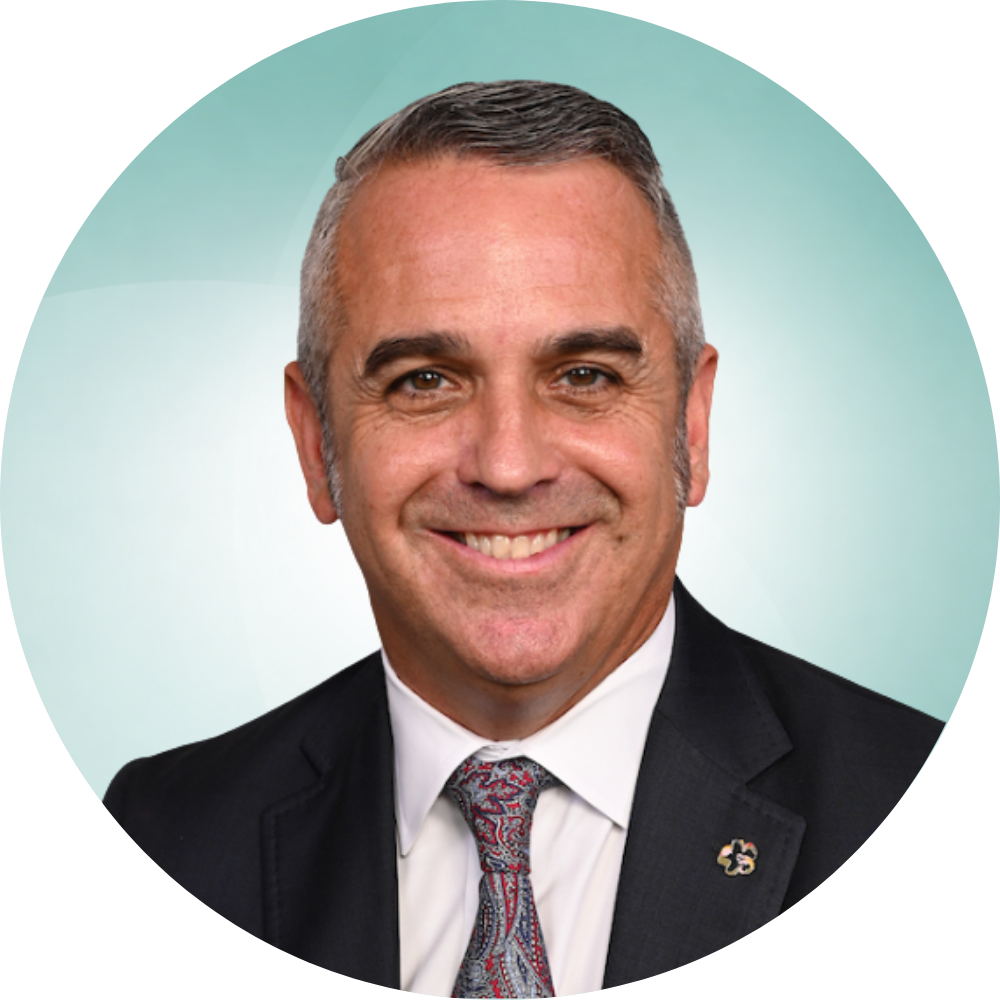
Dr. Kevin Gallick has served as Assistant Superintendent of Educational Services for Rich Township HS District 227 since 2022, where he leads the district’s focus on literacy and instruction.
Previously, Gallick served in district leadership roles in Providence Public Schools, where he supported principal leadership development. Gallick spent his first 17 years as an educator in Chicago Public Schools, including 8 years as a principal of a large neighborhood high school.
He is a graduate of Indiana University and the University of Illinois at Chicago, where he earned both a Master of Arts in the Teaching of History and a Doctor of Education in Urban Education Leadership.
Partner With WestEd to Strengthen Academic Literacy
Get started with Reading Apprenticeship®.

Ready to Support Your Thriving Learners and Empowered Communities?
Connect with our WestEd experts.
"*" indicates required fields
More Related to This Post
Blogs & Podcasts
Research insights and stories designed to inform, engage, and inspire.



Resources
Browse our high-quality publications and resources designed to inform and engage professionals in a variety of fields including K–12 education, early childhood, and health and justice.